

More Than Airplanes at the Airport
If you’re anything like most people from Seattle and western Washington, when you go to the Seattle-Tacoma International Airport (SEA) to catch a flight you head right for the security line, immediately followed by your gate. You might stop at the restroom, a store, or a restaurant, but most are not likely to take their time to admire the art on the walls or even a piece of sculpture sitting on a platform practically right in front of you. I recently started to pay more attention to the colors, shapes, and images all around me when I’m there, which brought me to spending a full day and walking 4.5 miles, exploring the public art. at Sea-Tac. Believe it or not, I didn’t see every every single piece of art in the airport, and I’m showing only about one half of what I photographed. There’s so much more to see.
Pre-Security Mezzanine and Ticketing

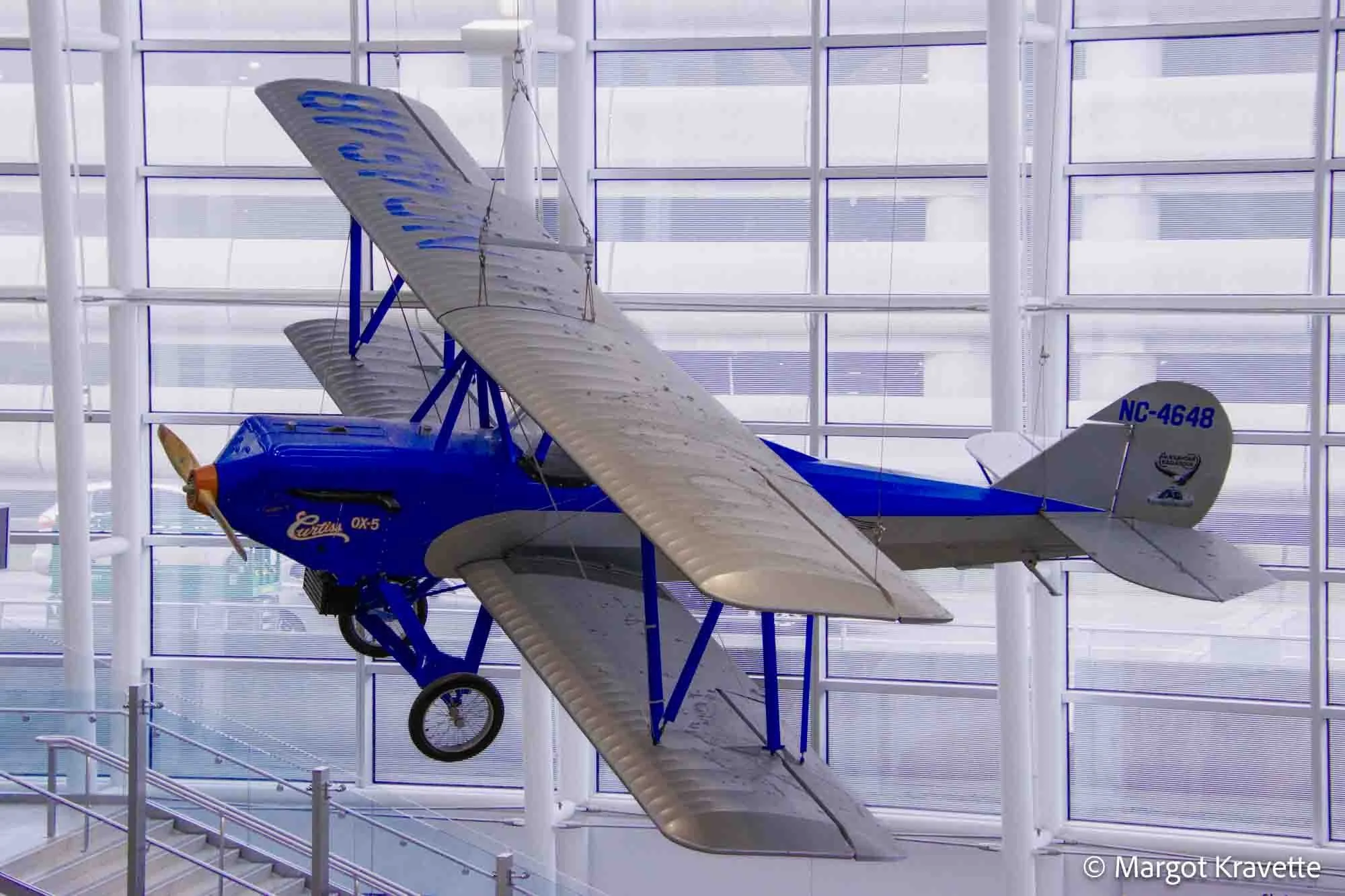
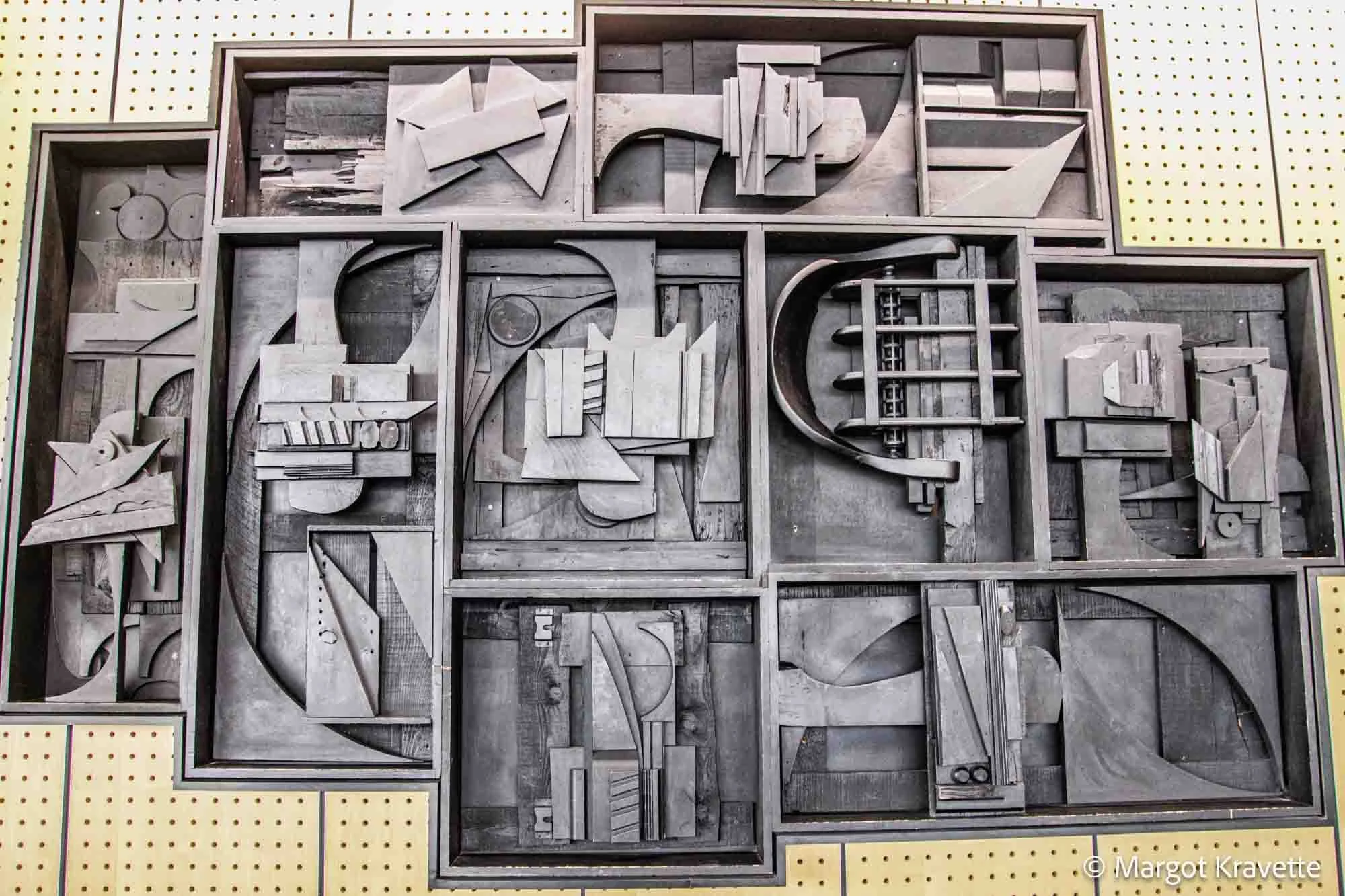
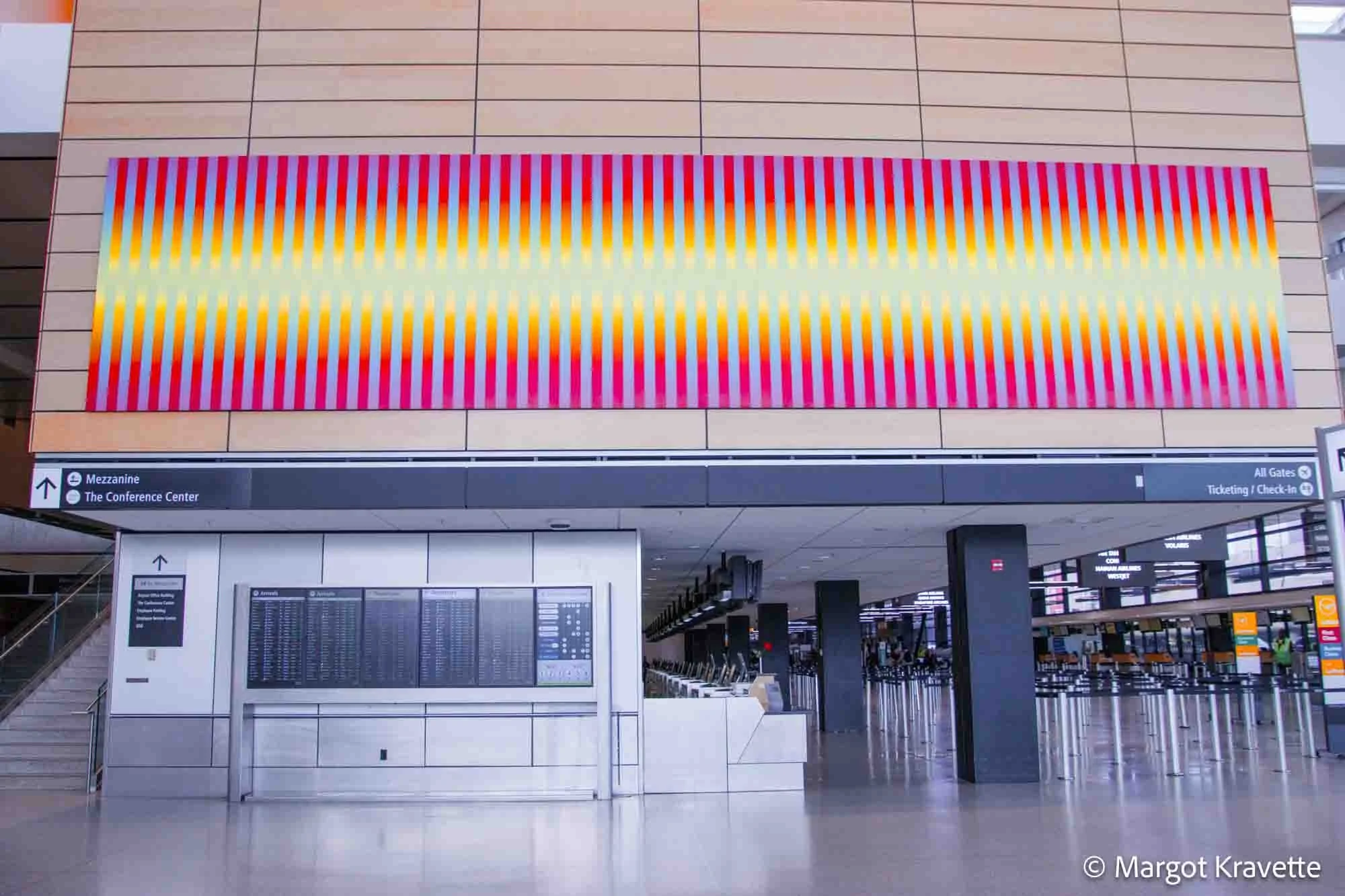
Since a good proportion of the art is behind Security , I was able to obtain a Visitor Pass which opened the airport to see more art than I would have imagined. Visitor passes are available for individuals that do not have tickets and need to enter post-security areas to meet arriving passengers, to spend more time with parting families,, or to shop or enjoy the restaurants. Requests can be made up to seven days in advance and they are limited to300 each day.
Baggage Area
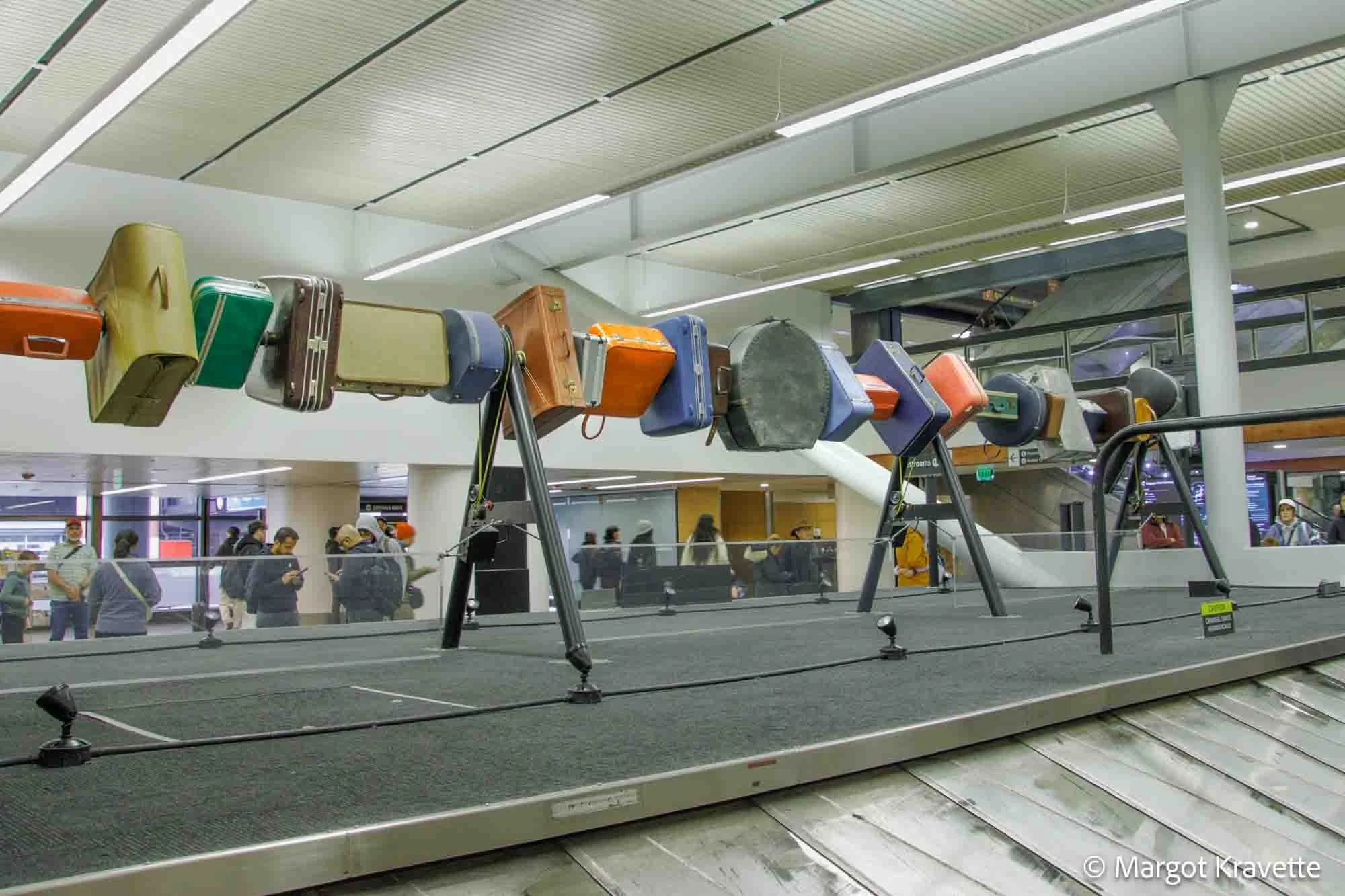
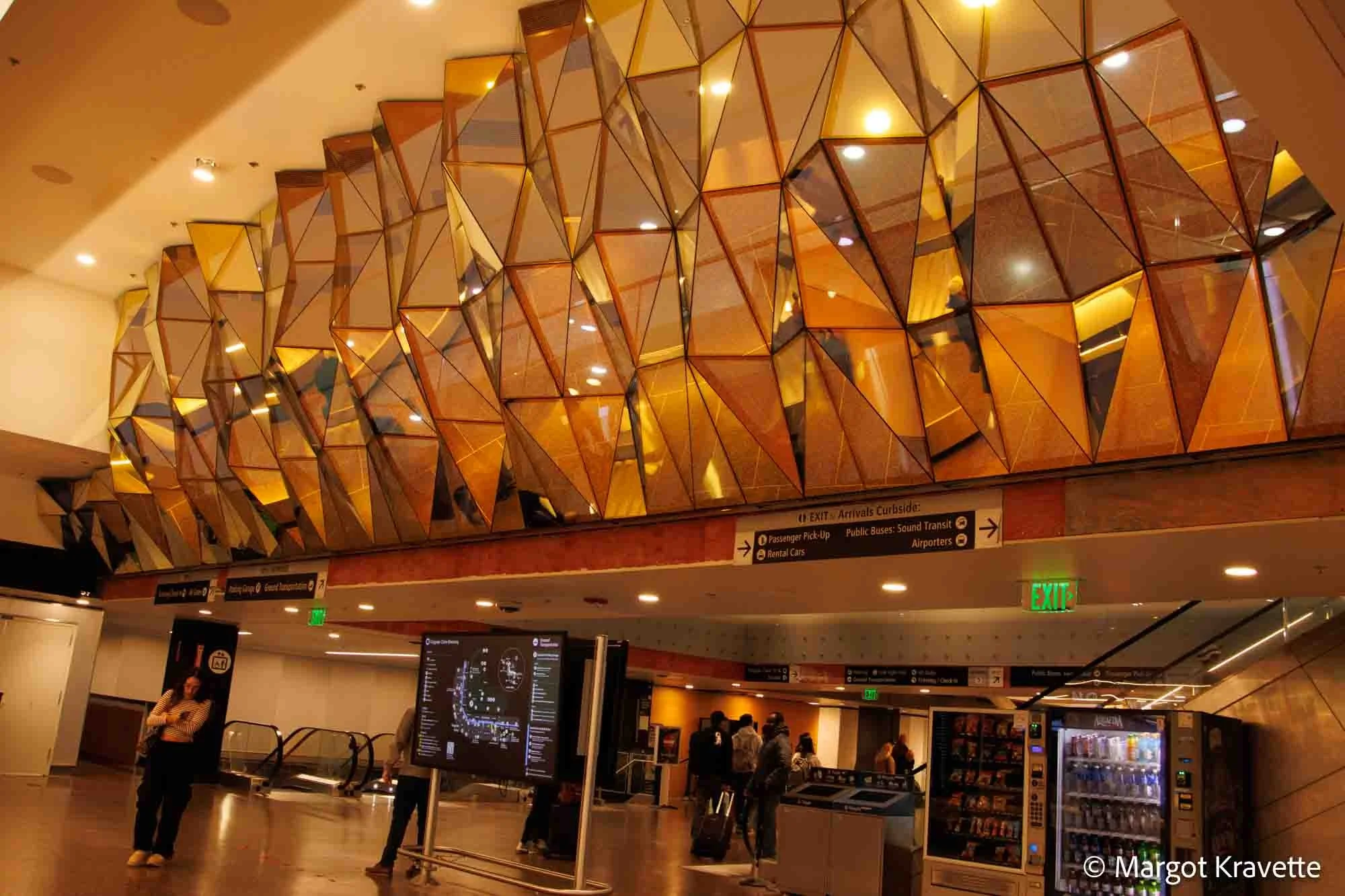
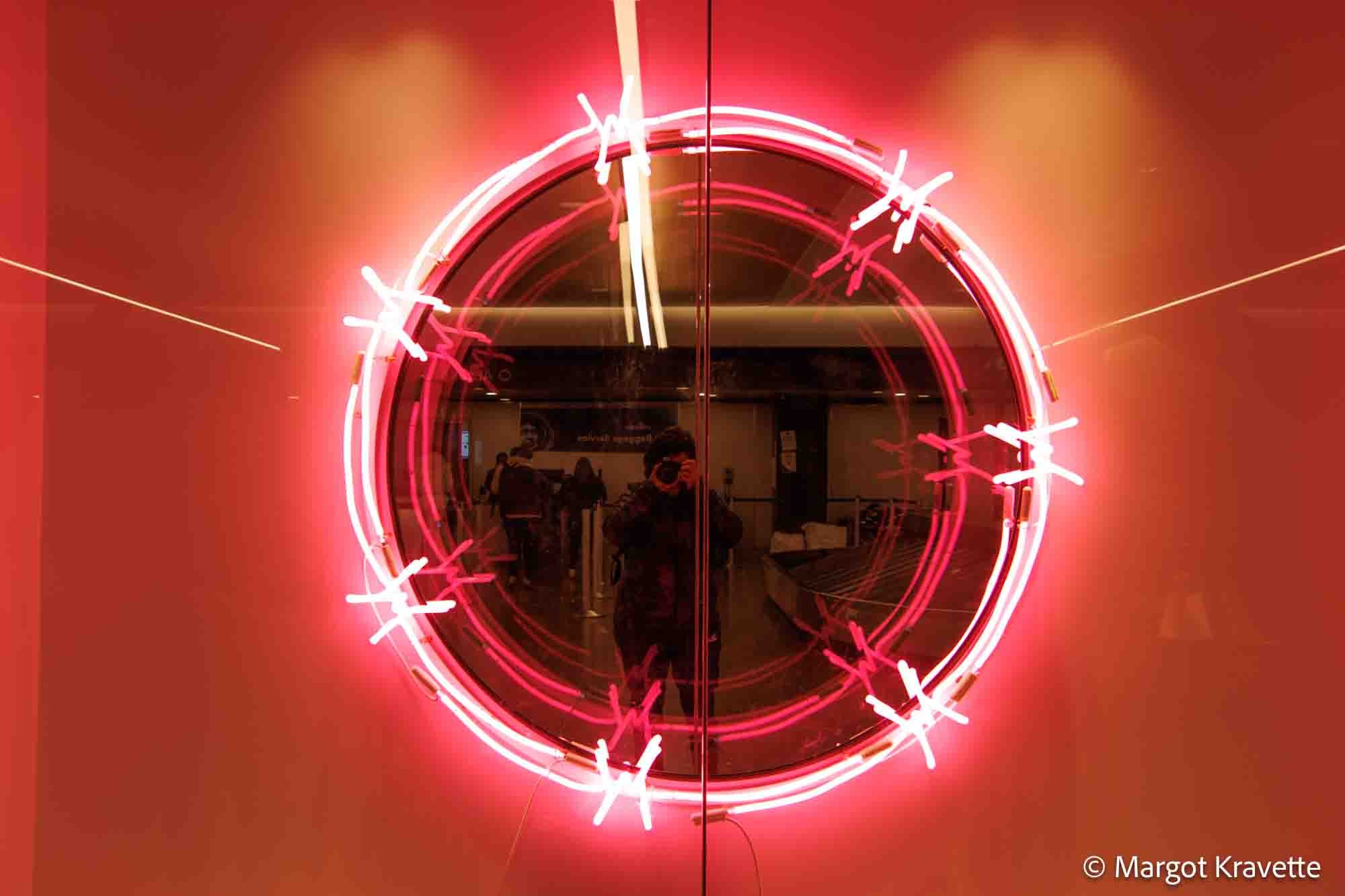
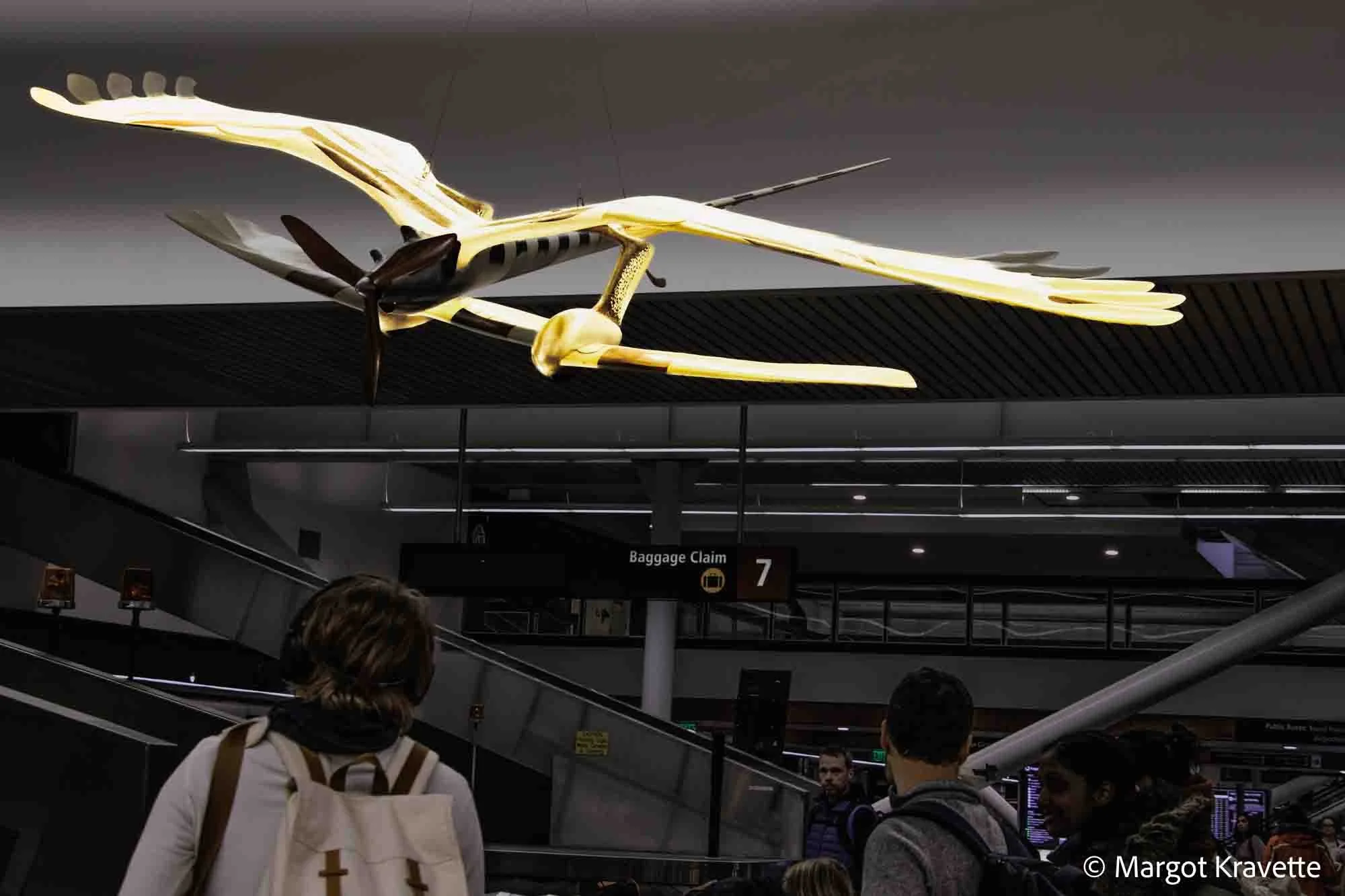
The public art collection at Sea-Tac consists of approximately 300 installations valued at over $40 million. Managed by the Port of Seattle, Sea-Tac was the first airport program of its kind in the United States, established in 1968. The collection is integrated throughout the entire airport, featuring some of the finest contemporary work in glass, sculpture, photography, painting, and new media. The region's diversity is well represented through all-American, Asian, European, Northwest Native American, and folk-art. SeaTac is the busiest airport in the U.S. right now for public art. It is expecting to invest more than $20 million in public art by mid-2026, in anticipation of the FIFA World Cup in June and July of this year.
Terminal Areas
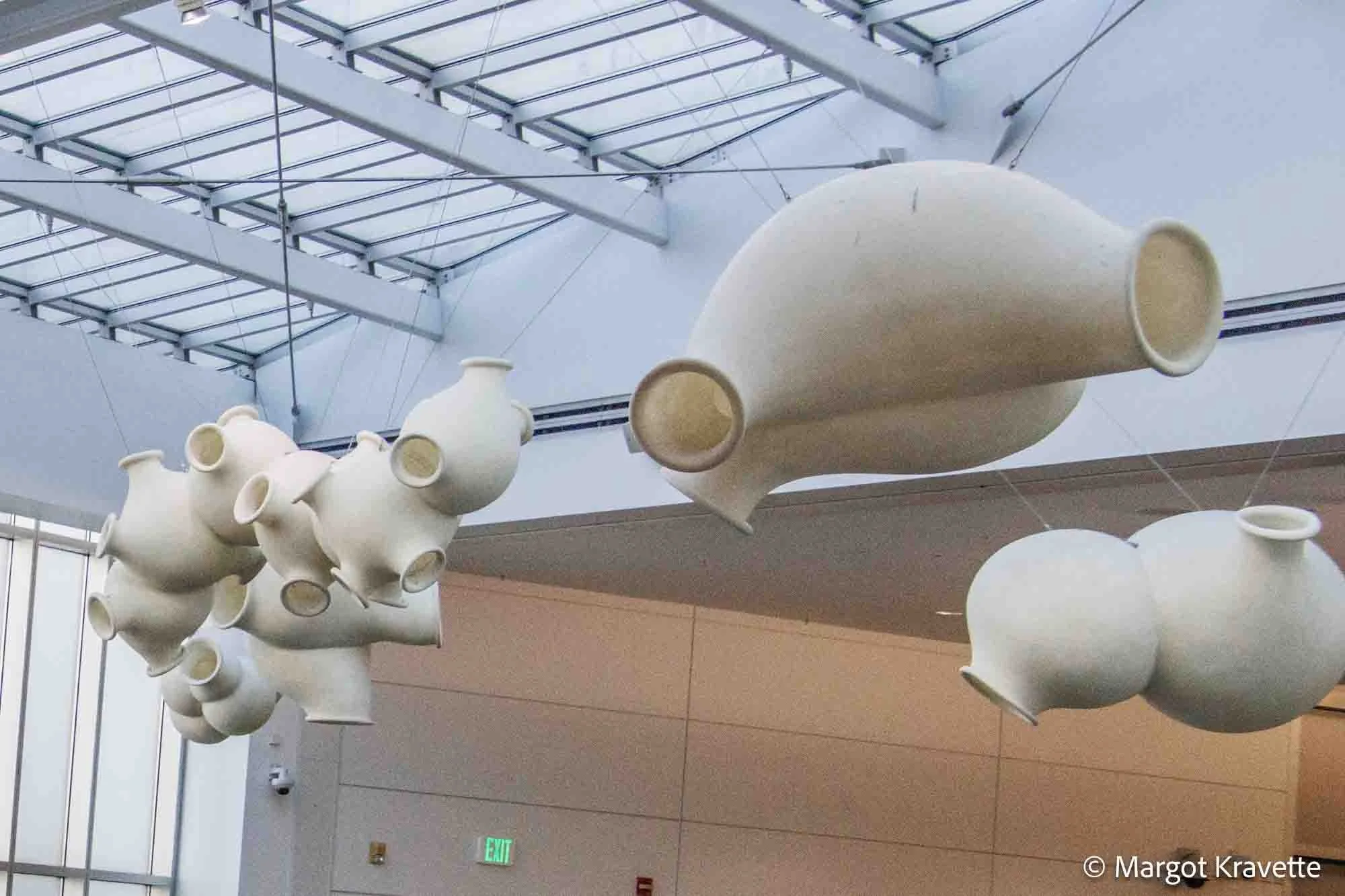
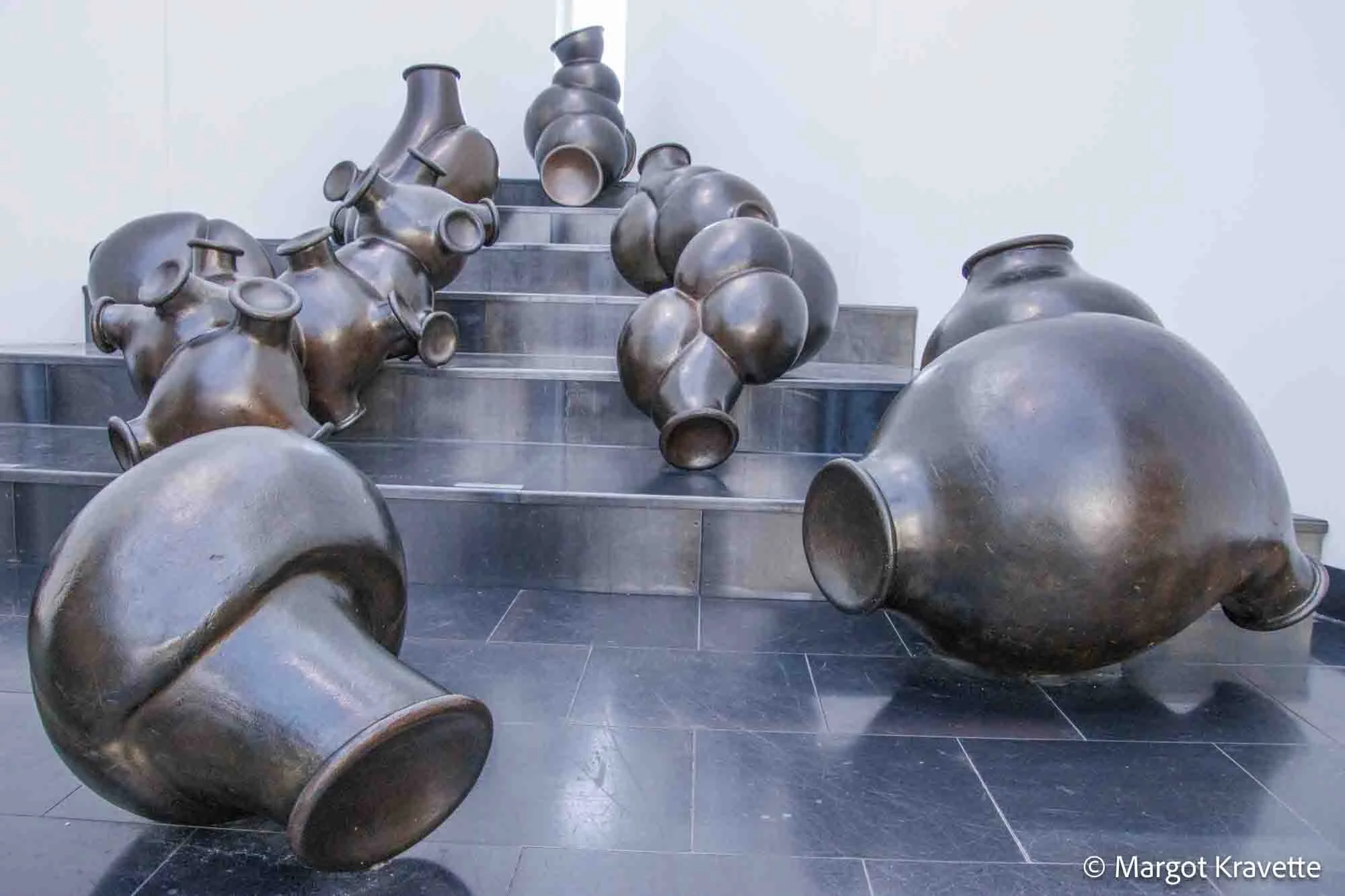

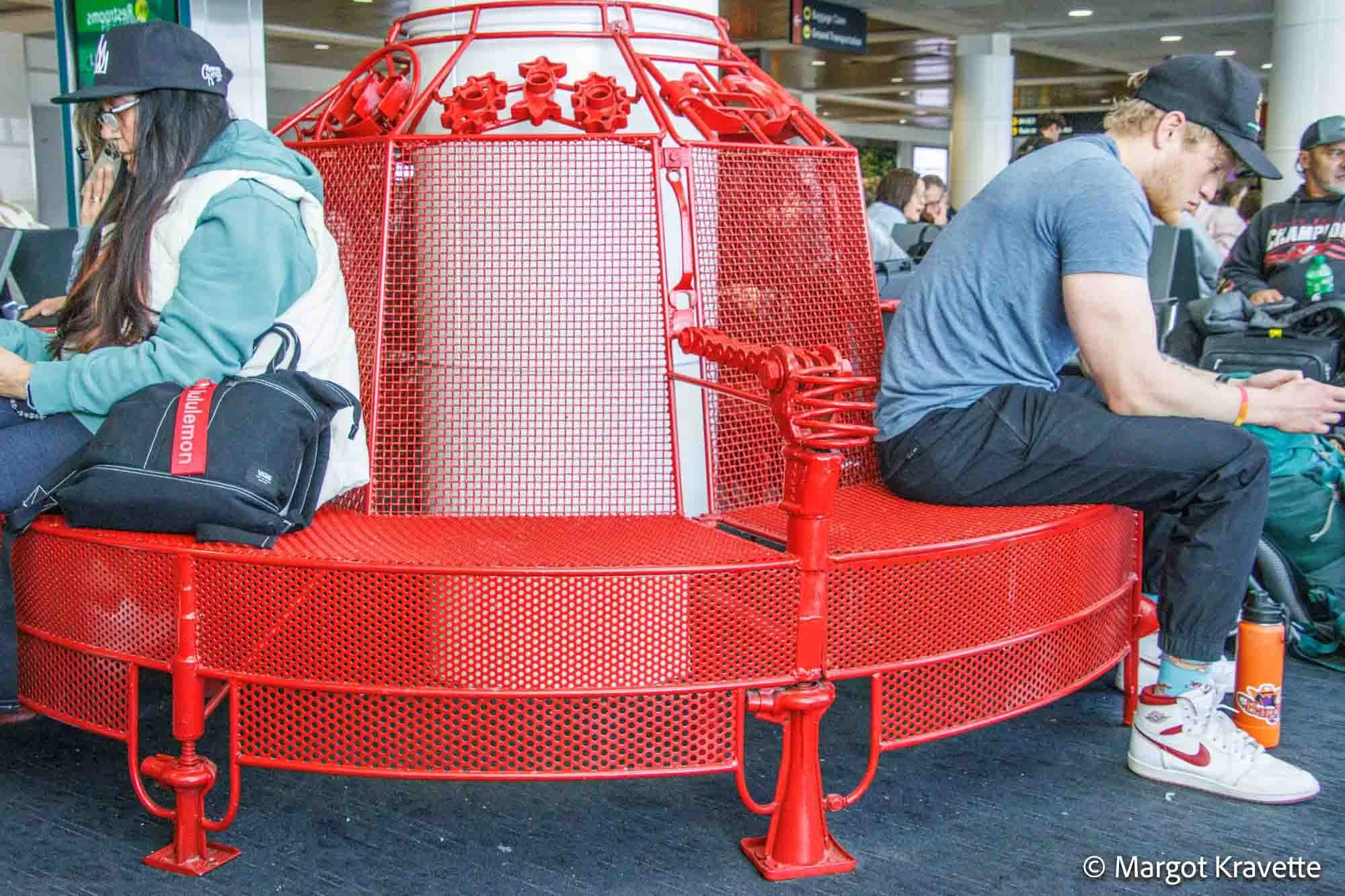
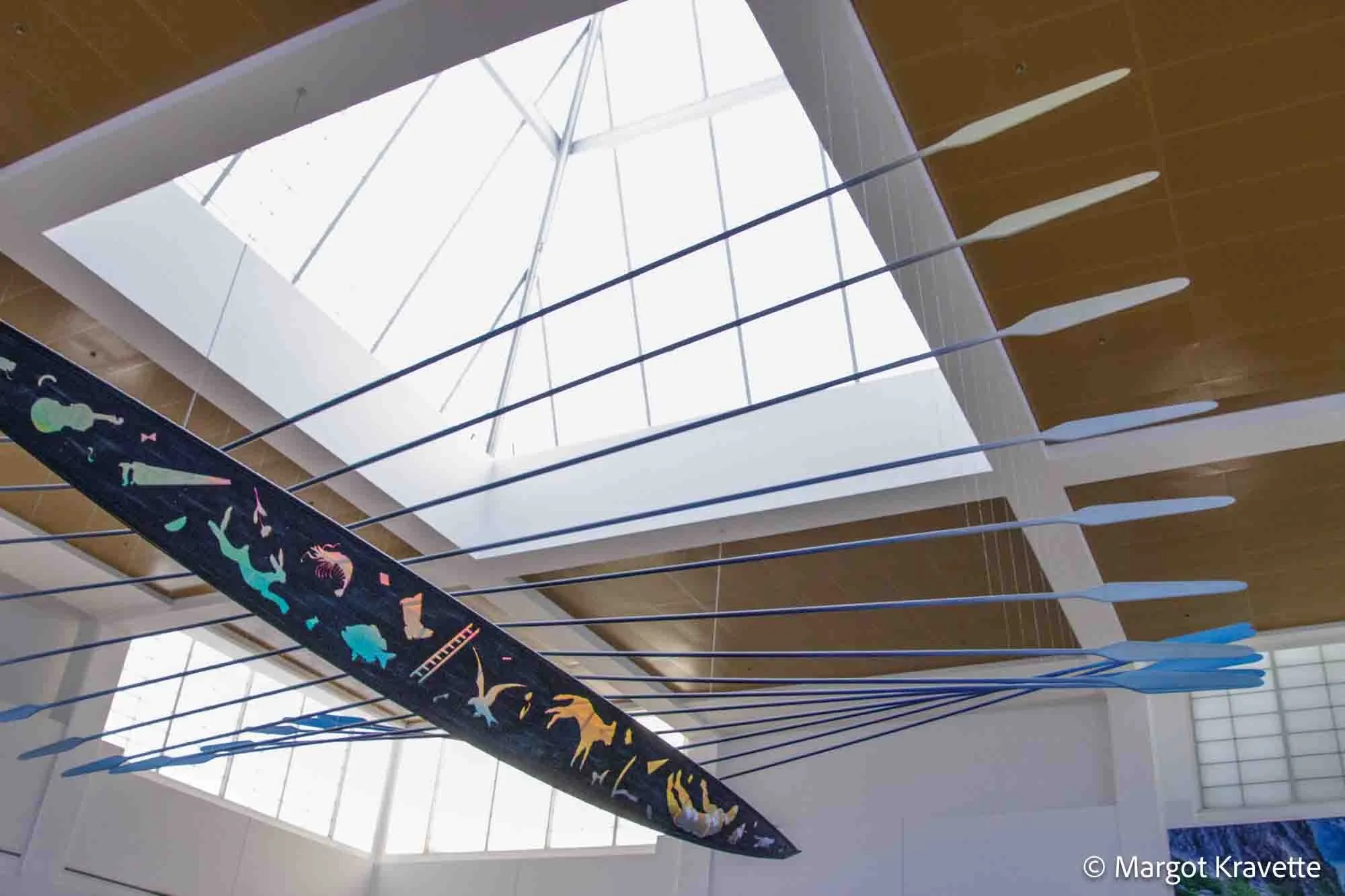
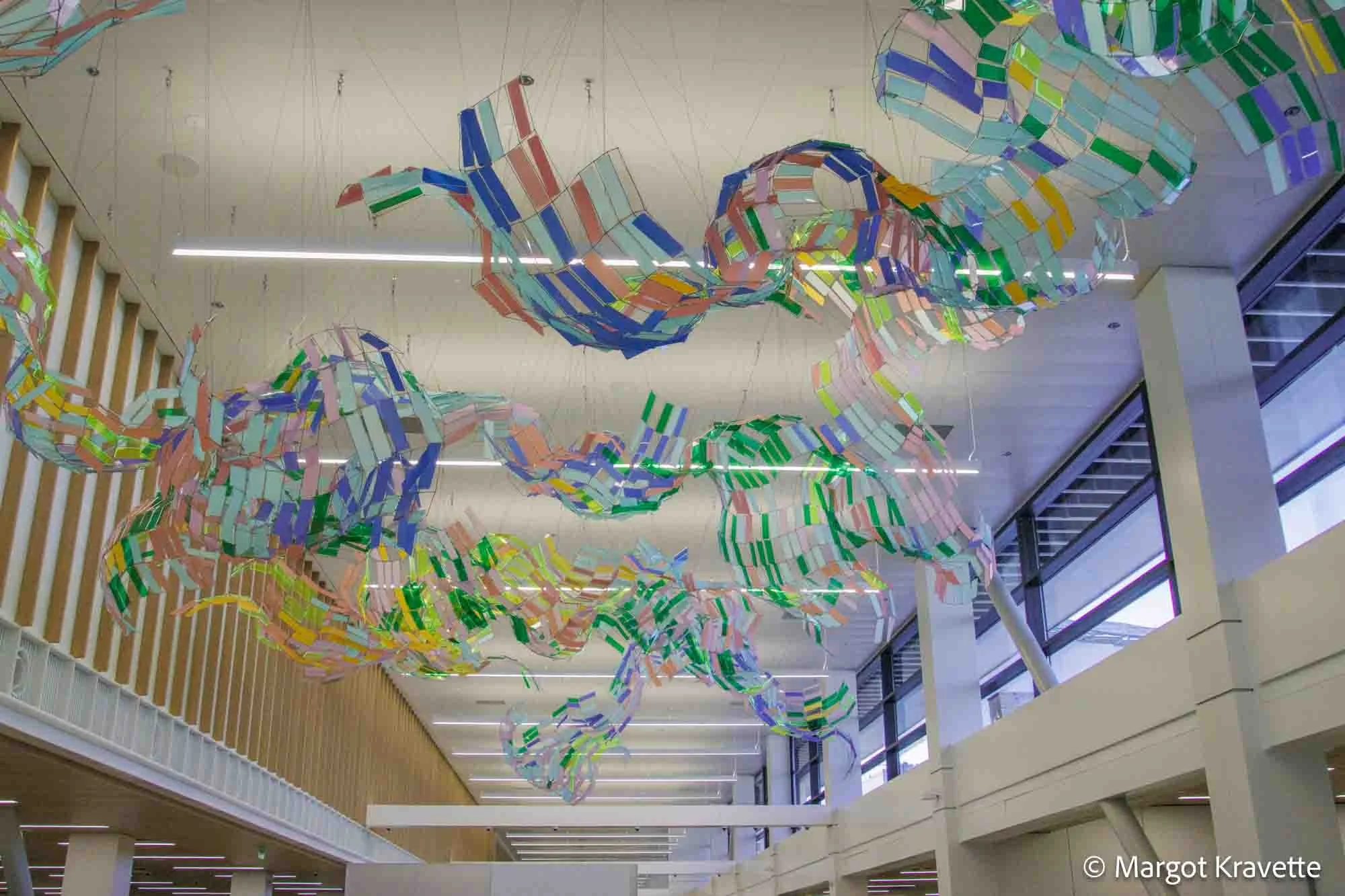
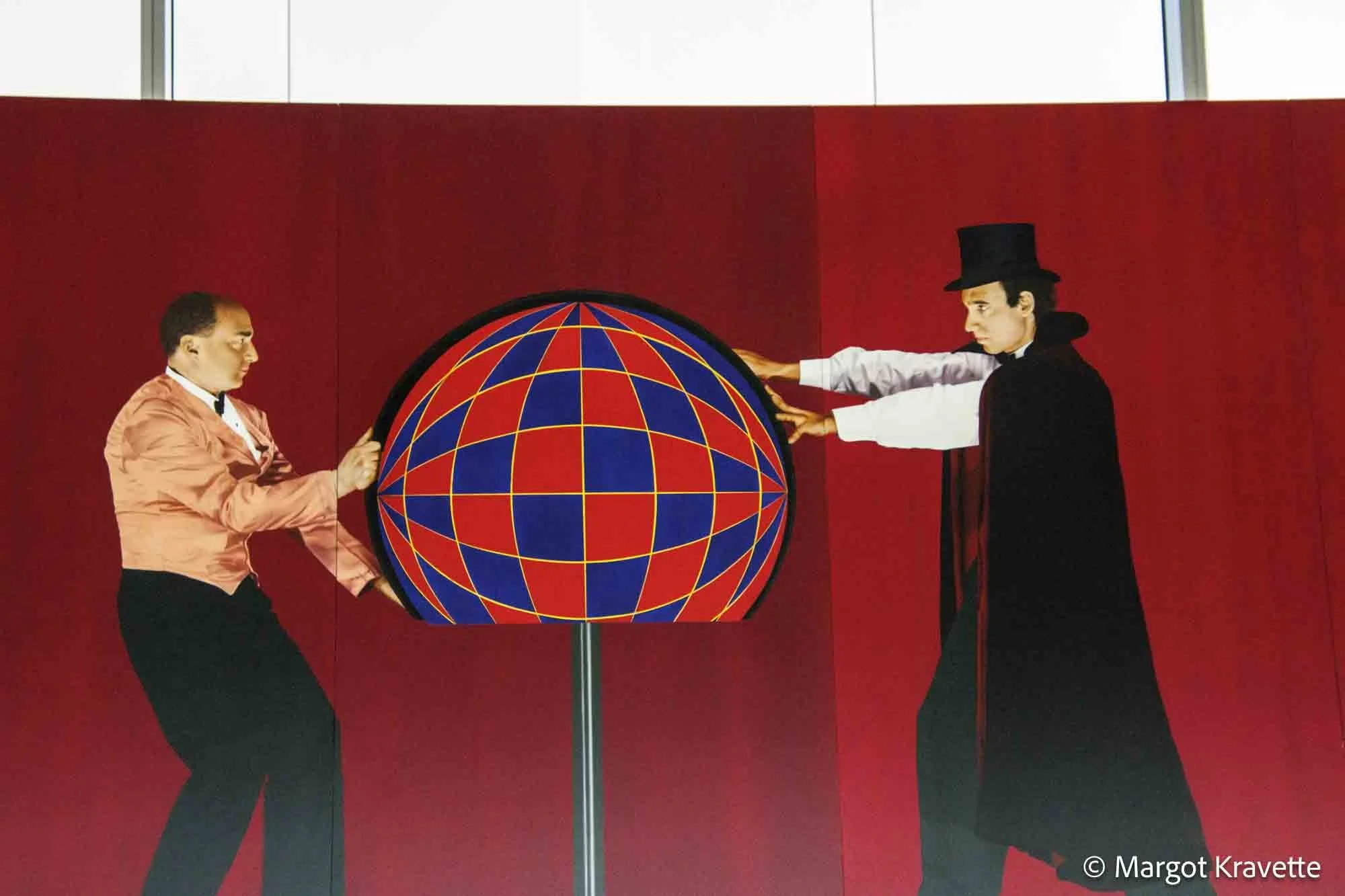

Funding for public art in SeaTac comes from three primary sources: the City of SeaTac (master plan, capital funding, initiatives), the Port of Seattle (1% for Art Policy and current investments), and King County & 4Culture (Cultural Funding, Grants, and the Airport Community Ecology, [ACE] Fund). The Port of Seattle has designated a total public art pool of more than $27, million for the 2022–2026 capital budget period.
Near Escalators
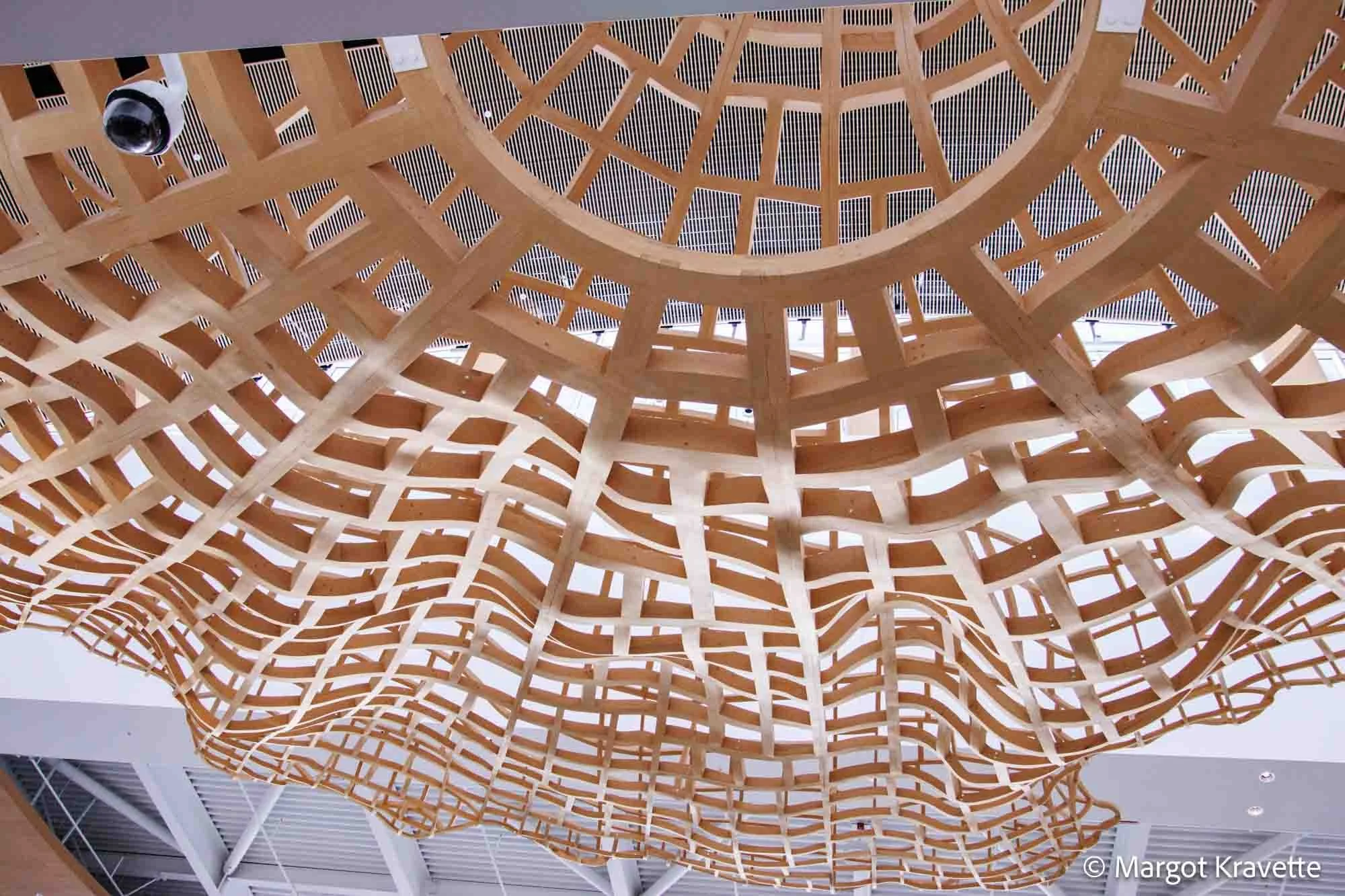
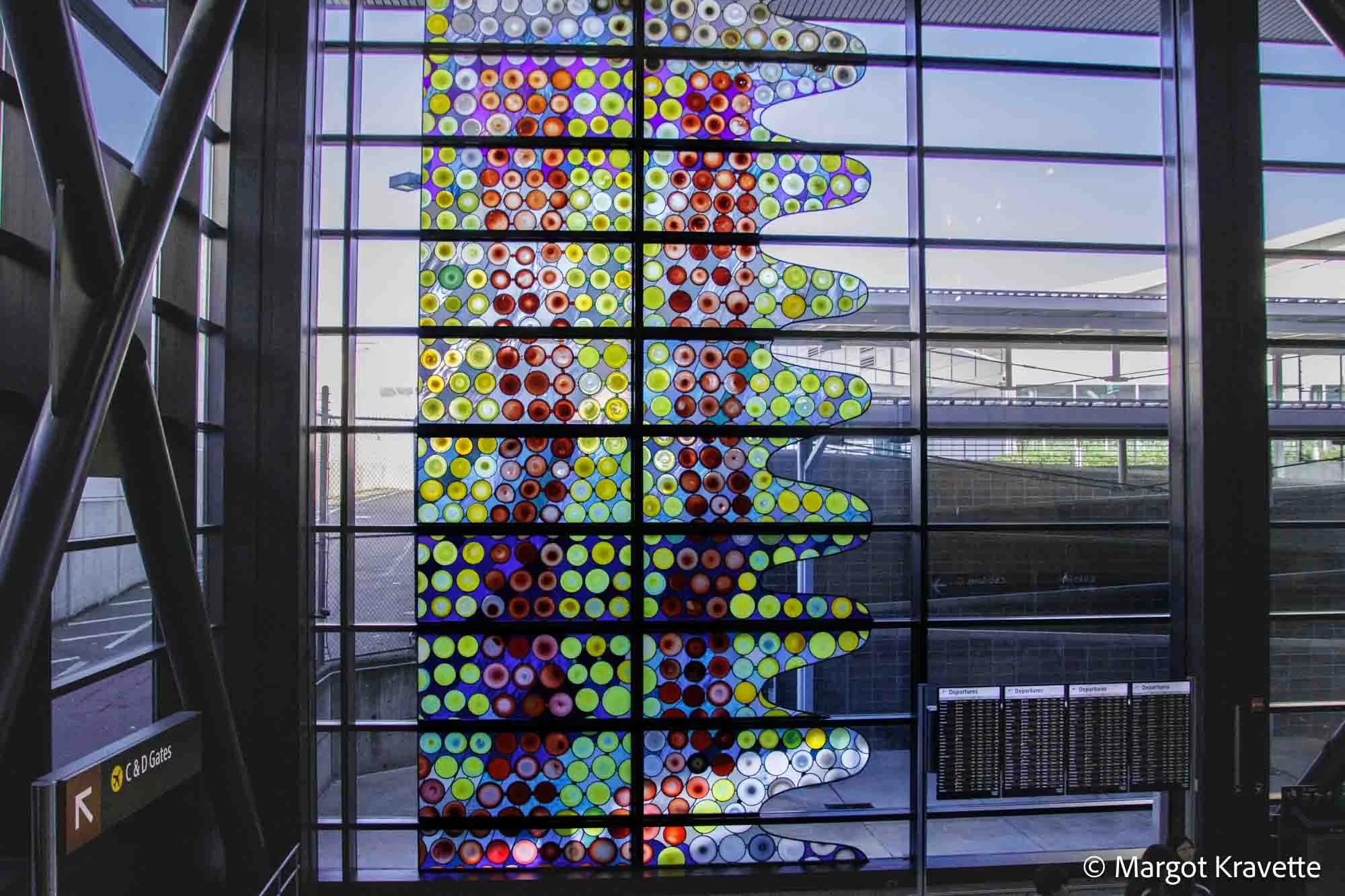
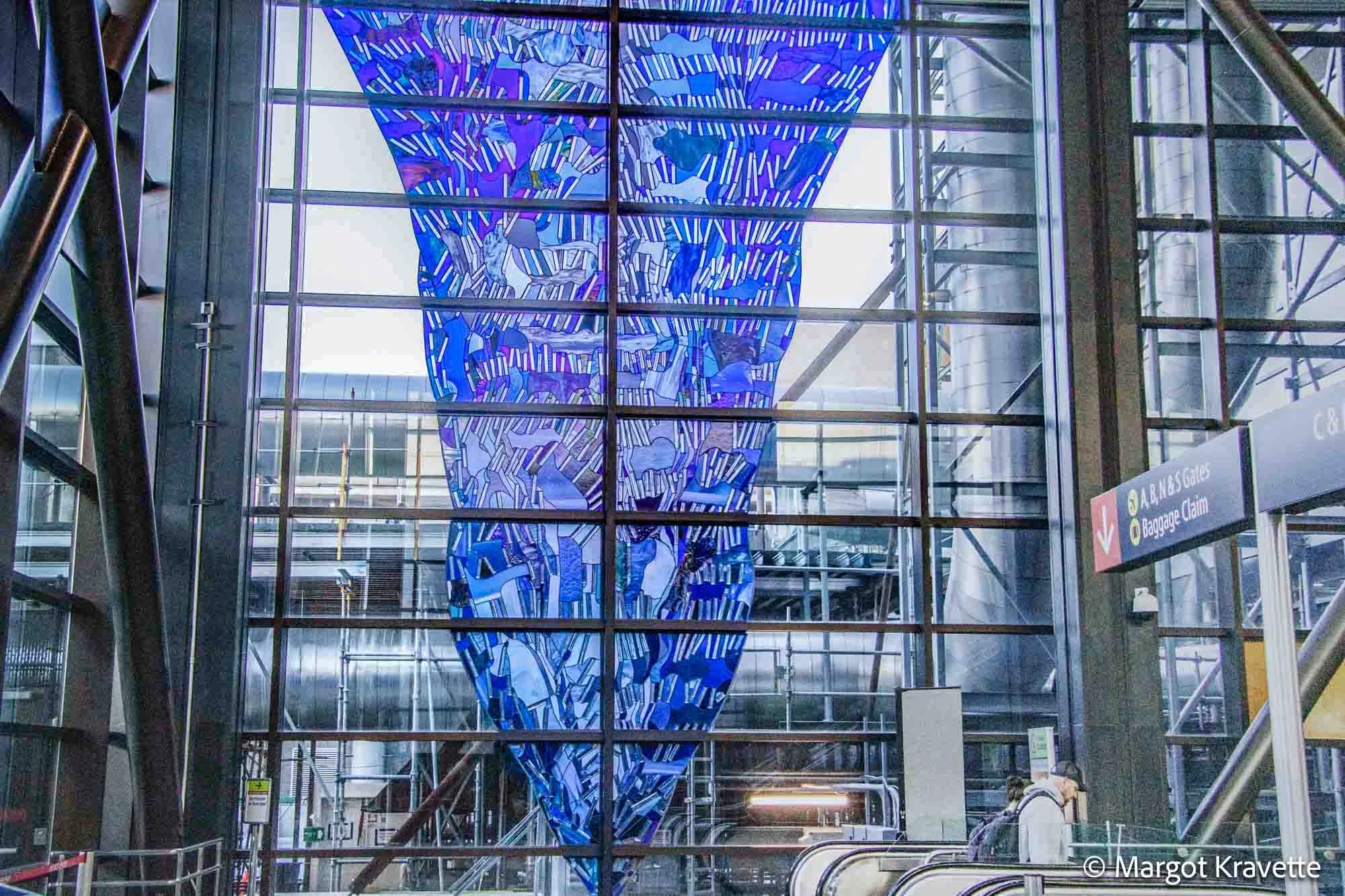
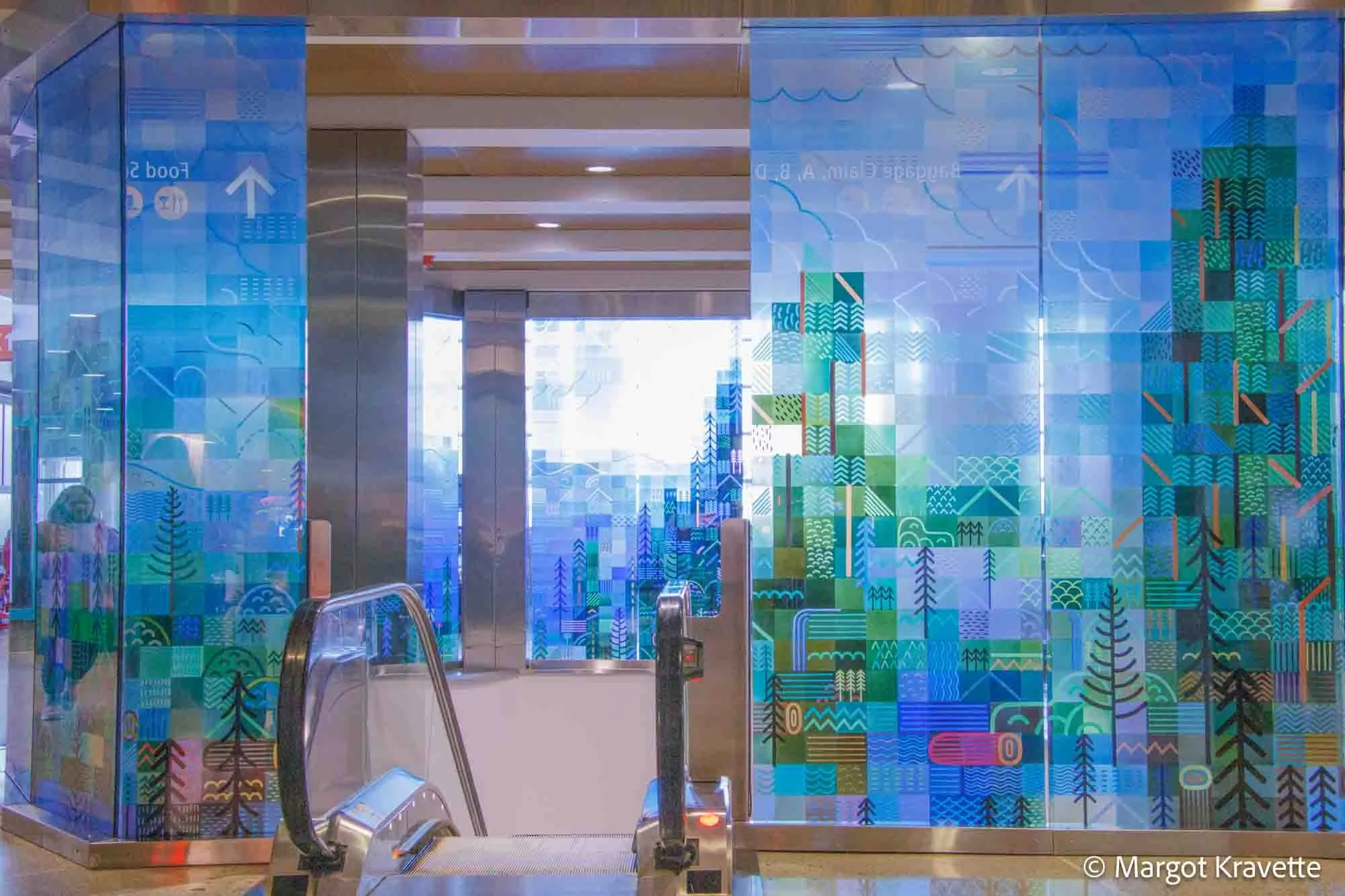
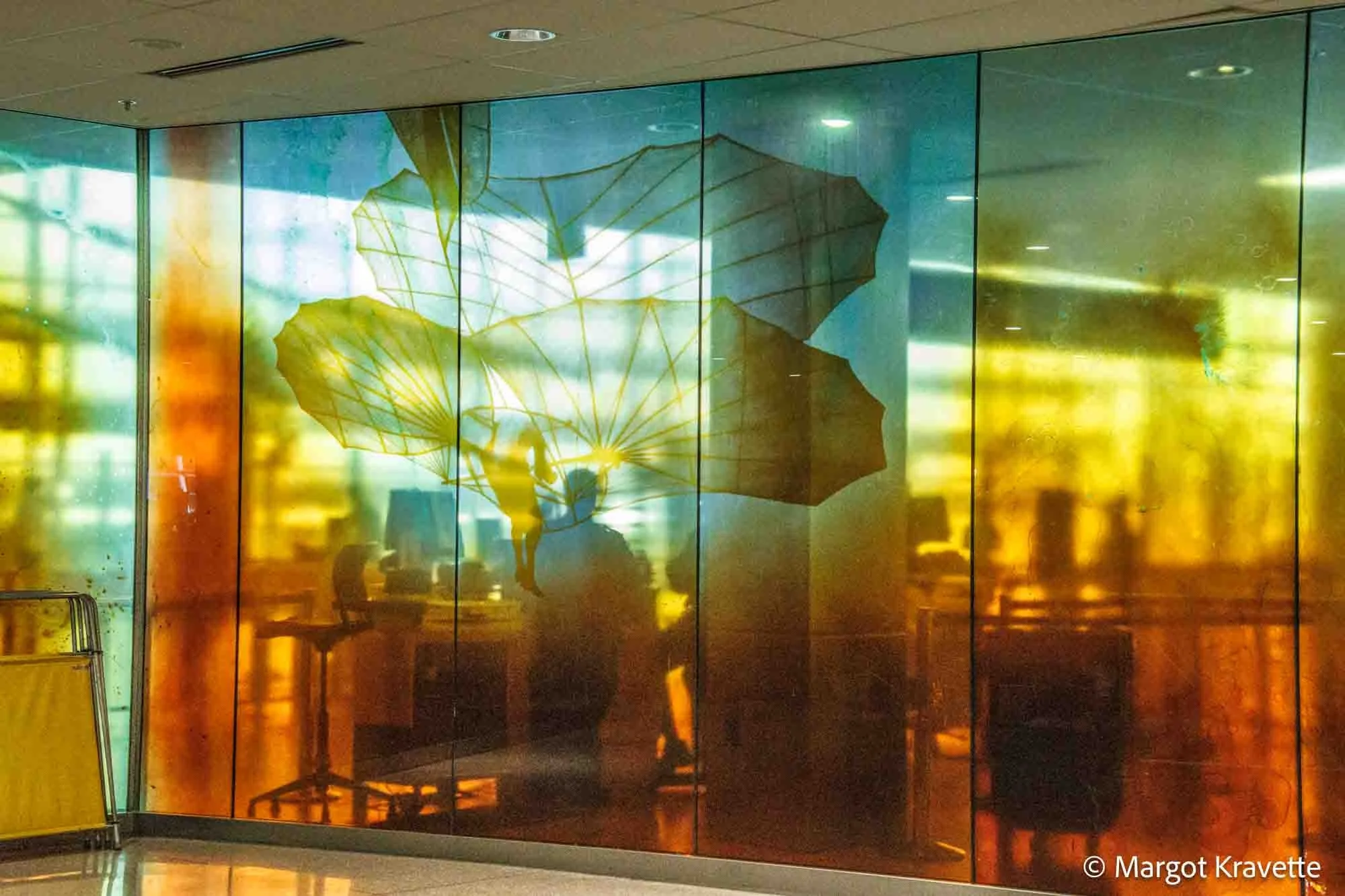
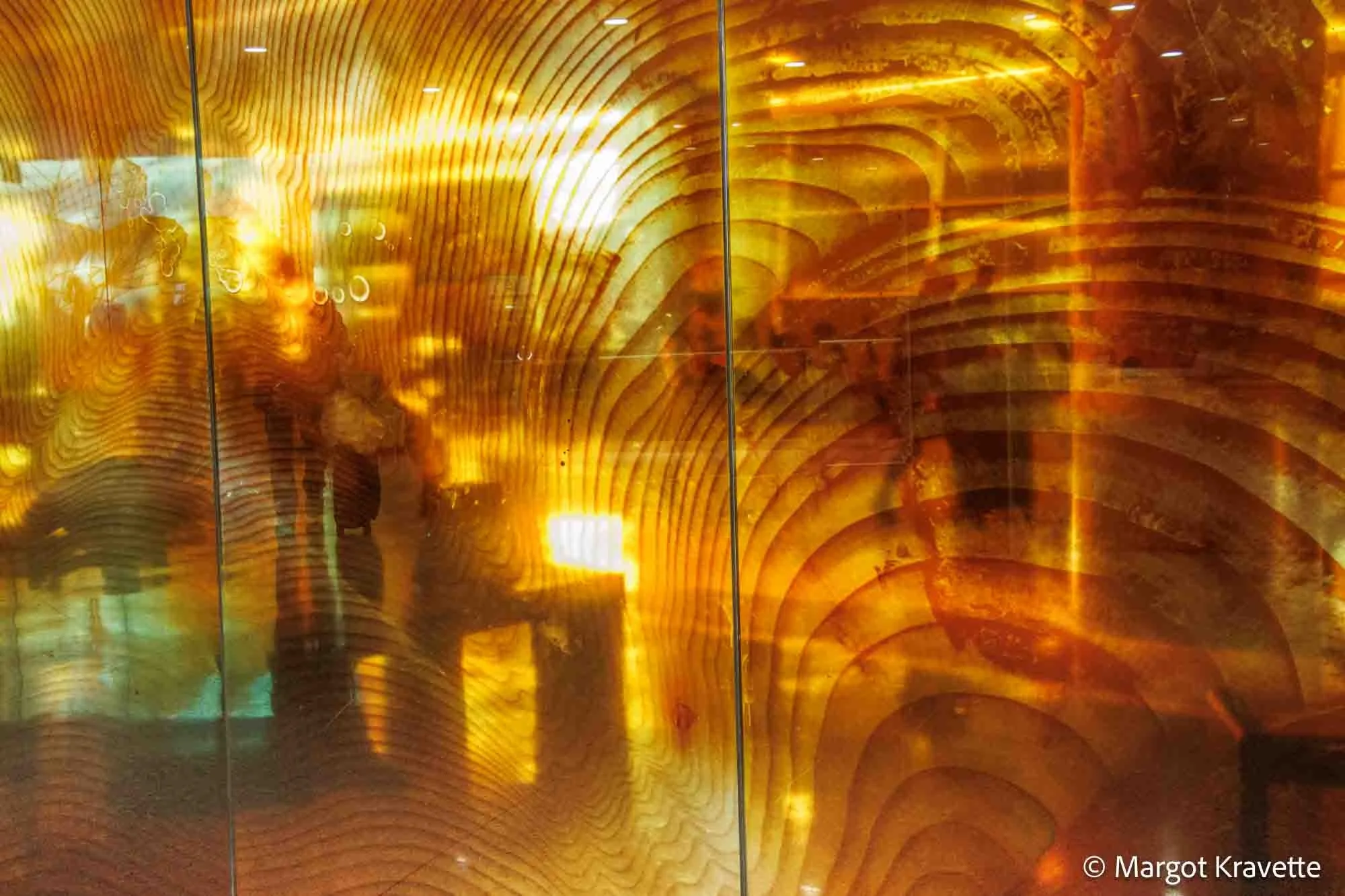
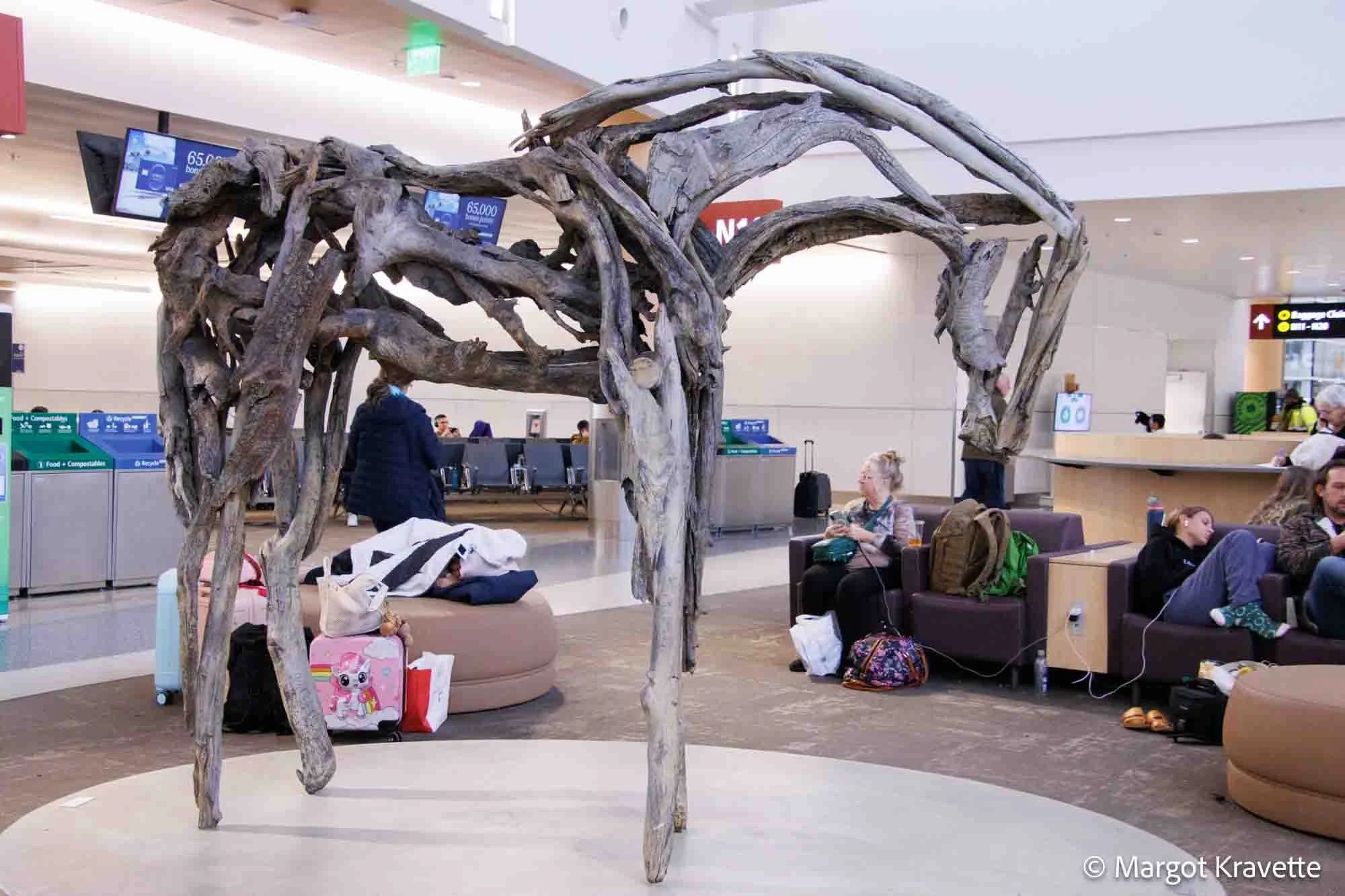
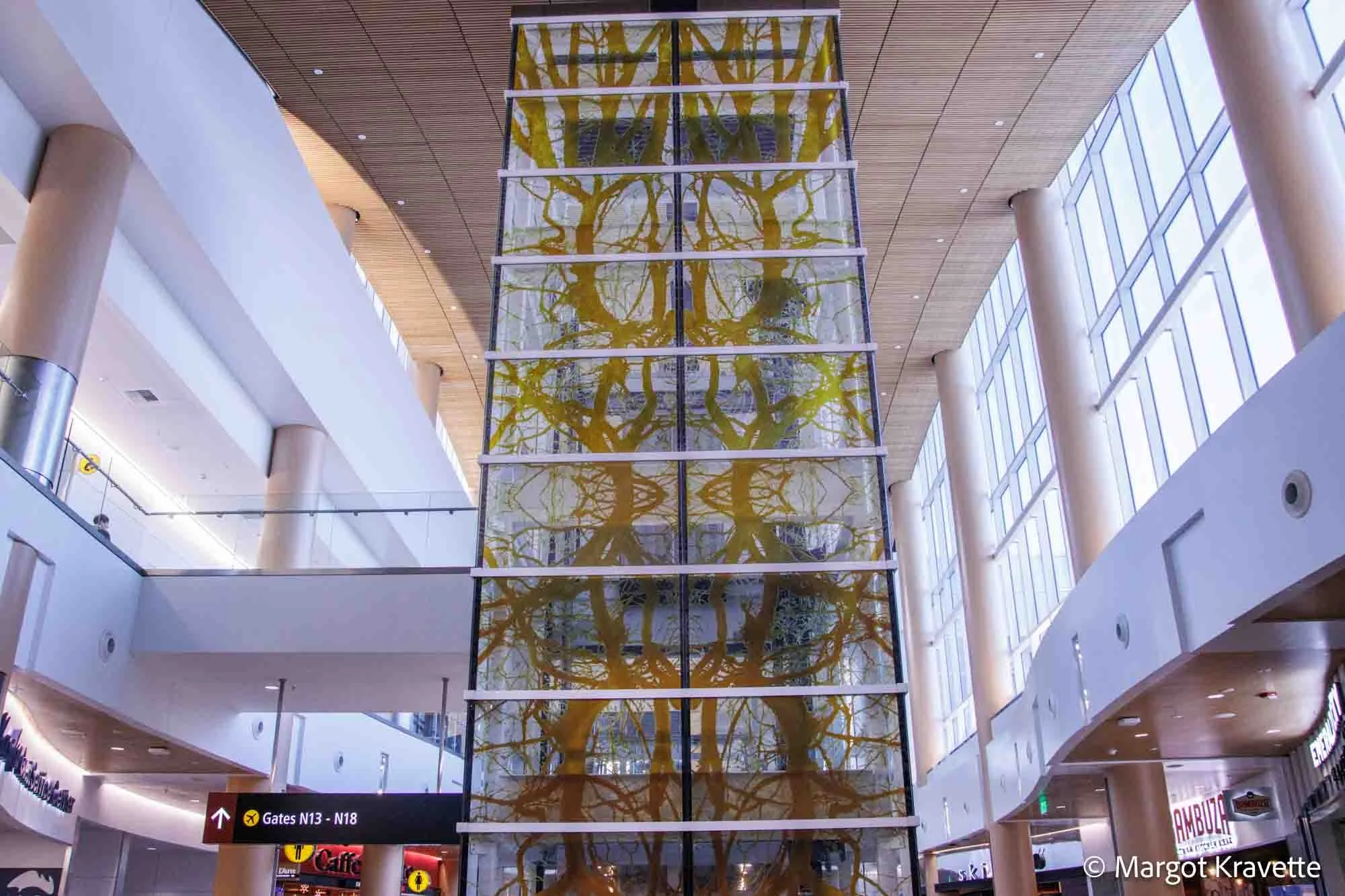
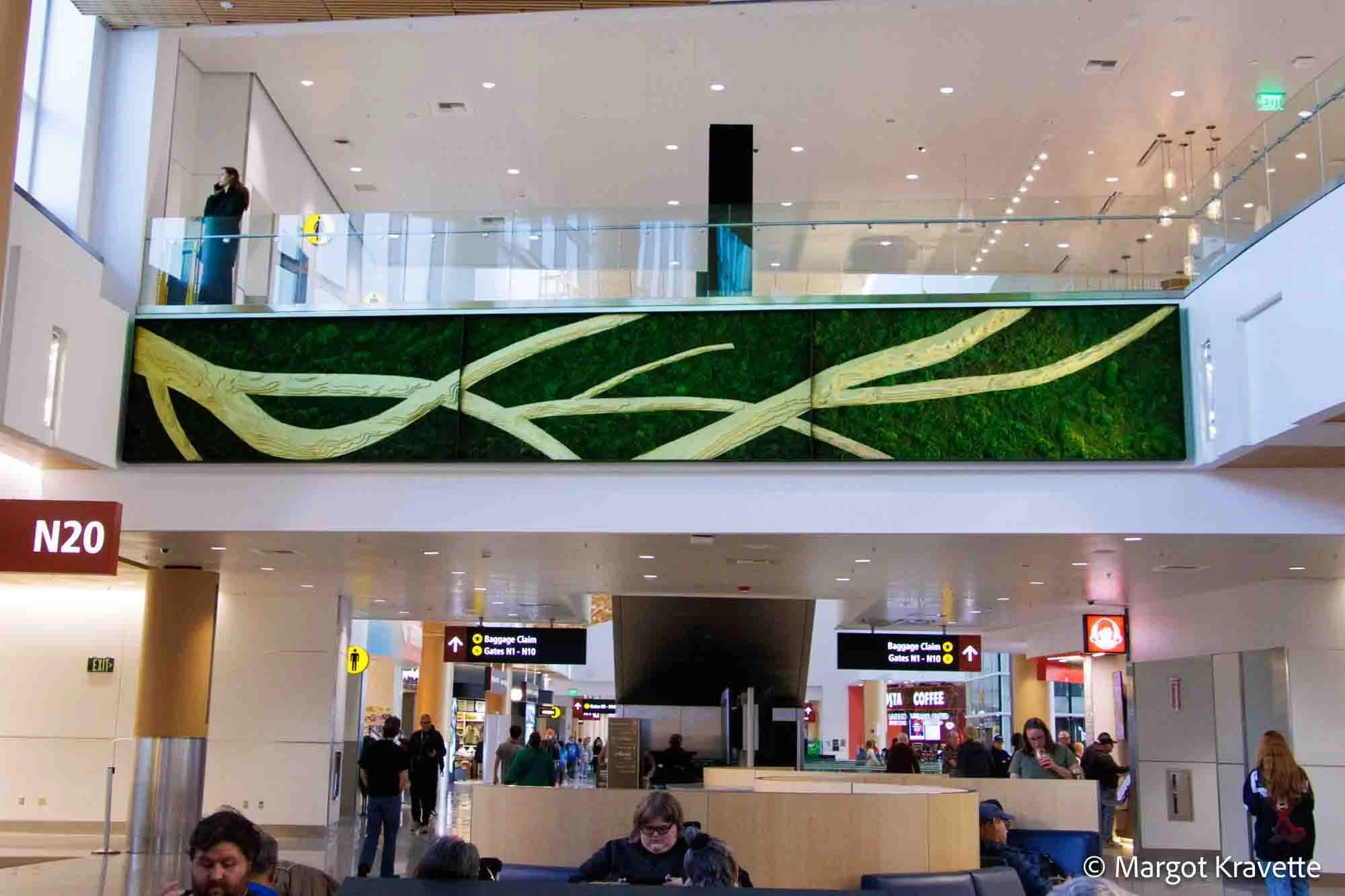
With the diversity of of artists in age, gender, and race, and the diversity of media with glass, paint, photography, and more, there are many pieces that represent the Pacific Northwest with the creativity and imagination bringing together the many artists and media. Several of my favorites are located in the N Concourse, one of the most recent remodel locations. A portion of Cathedral, the bronze log reminds us of the beautiful coastlines with their numerous logs as well as the glass panels that have been painted with countless trees in the Pacific Northwest. Cascadia shows its multiple colors of blue, green, and yellow referring to the brilliant colors of the trees and other landscaping. And Canopy shows preserved mosses and branch forms that reflect the epiphytes of the PNW rainforest.
All-Gender Rest Rooms
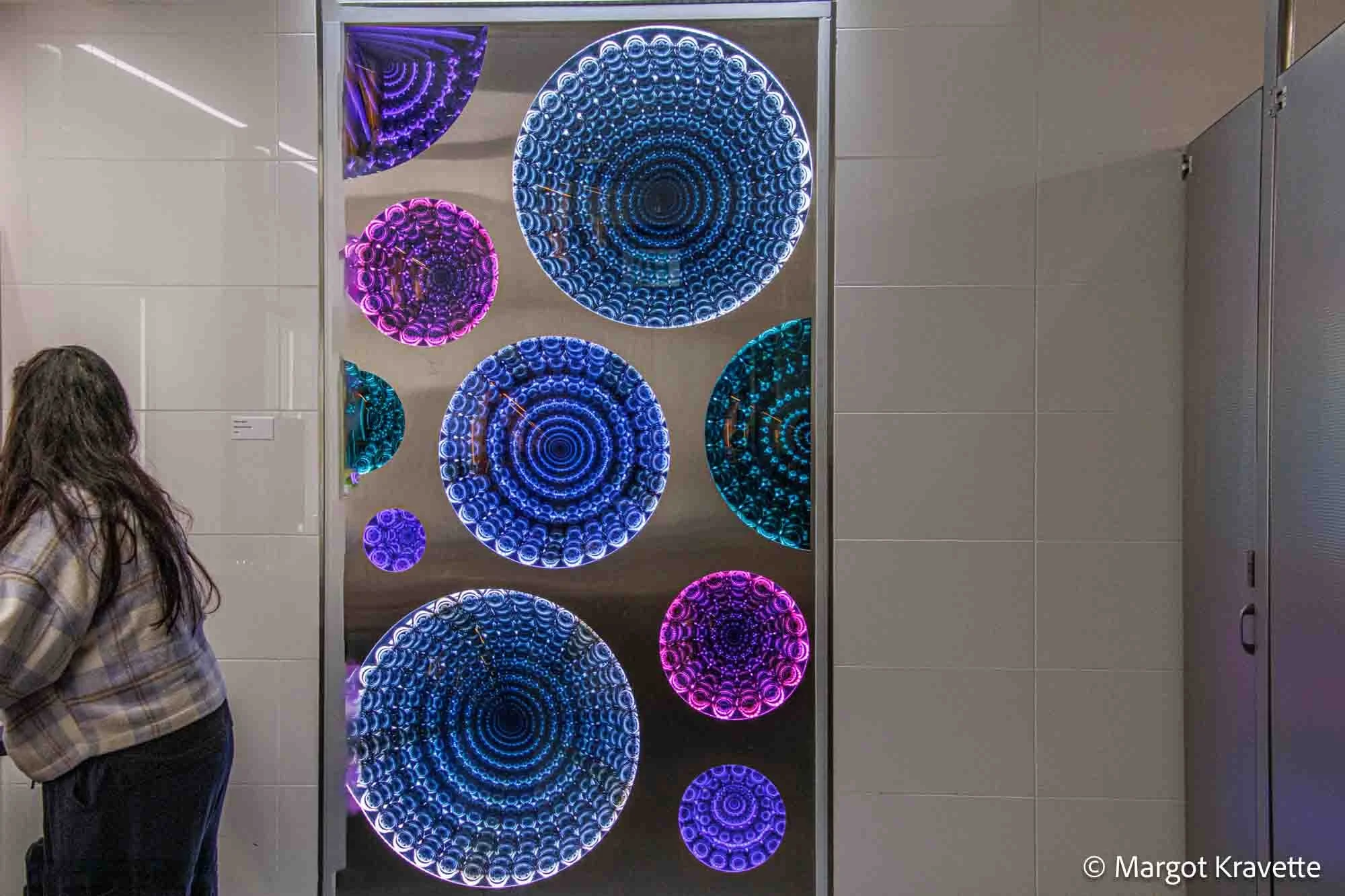
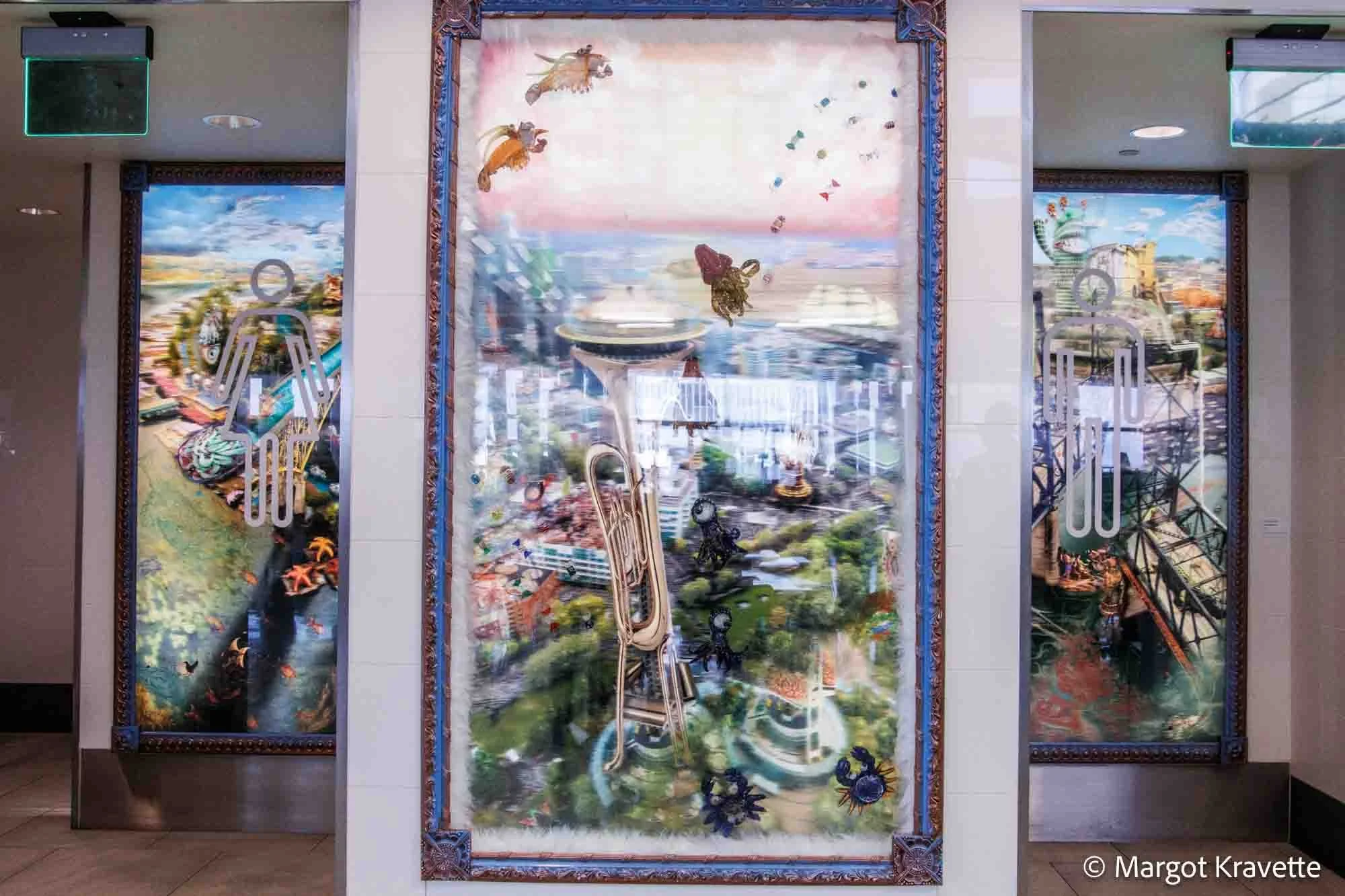
In 2022 when the Restroom Renovation project was initiated, its goals were not just to create facilities that accommodated all genders, but to invite artists that would create art that would support the LGBTQIA+ community. and make it welcoming for all that use its facilities. For the first restroom, 22 pieces done by 12 artists, both local and national. and works of art were chosen from six galleries in Seattle and Portland.
North and South Train Terminals
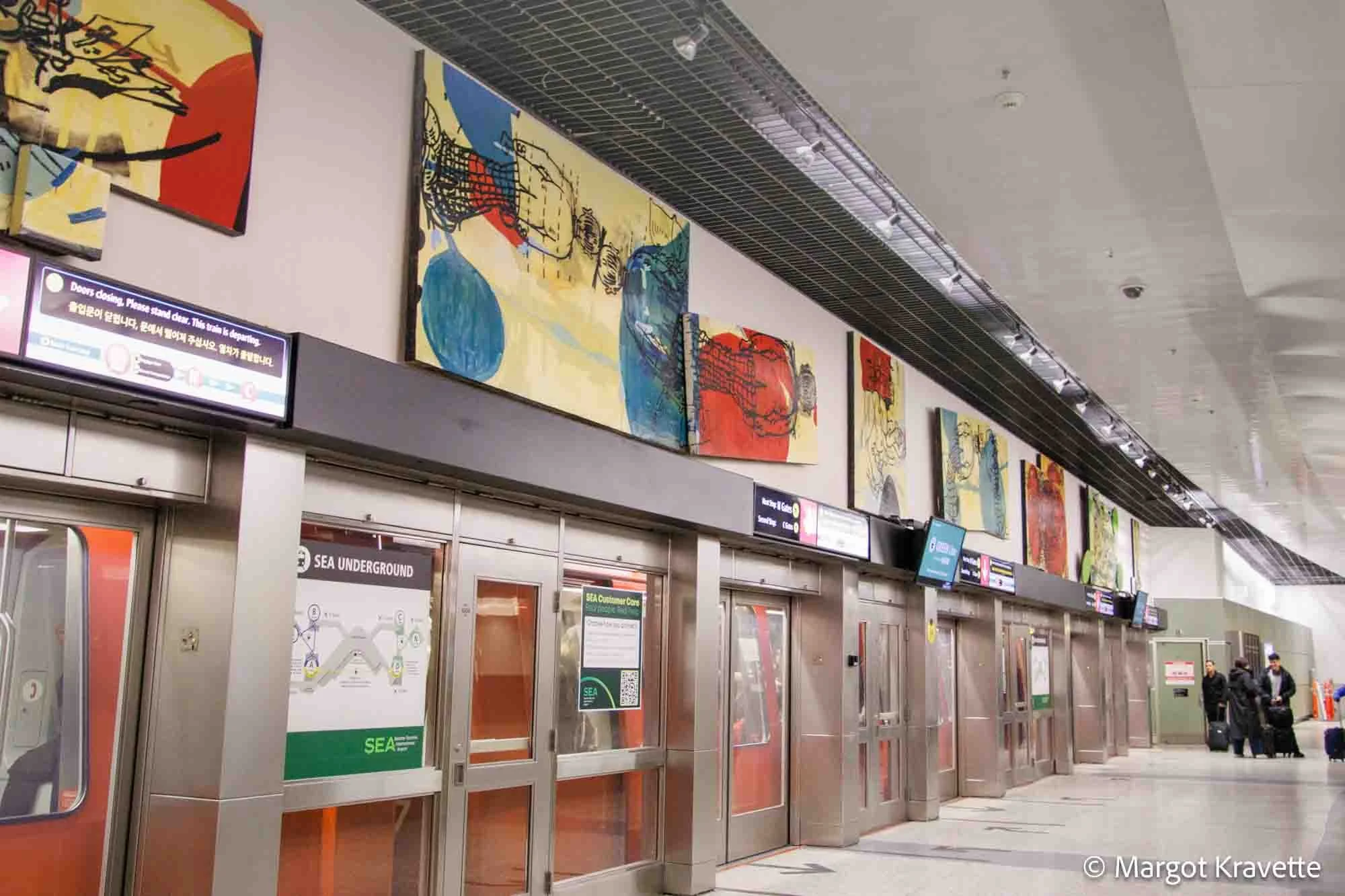
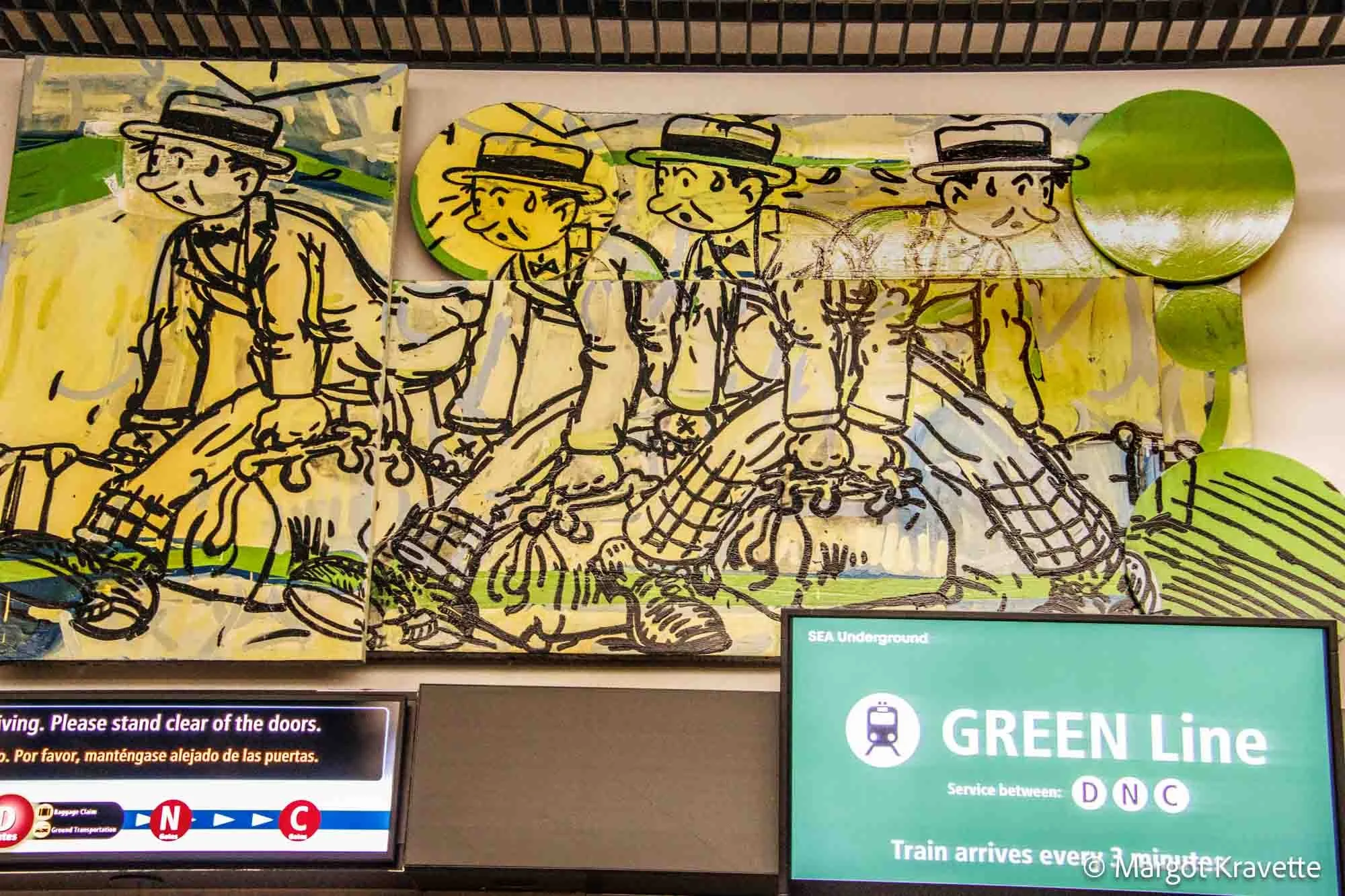
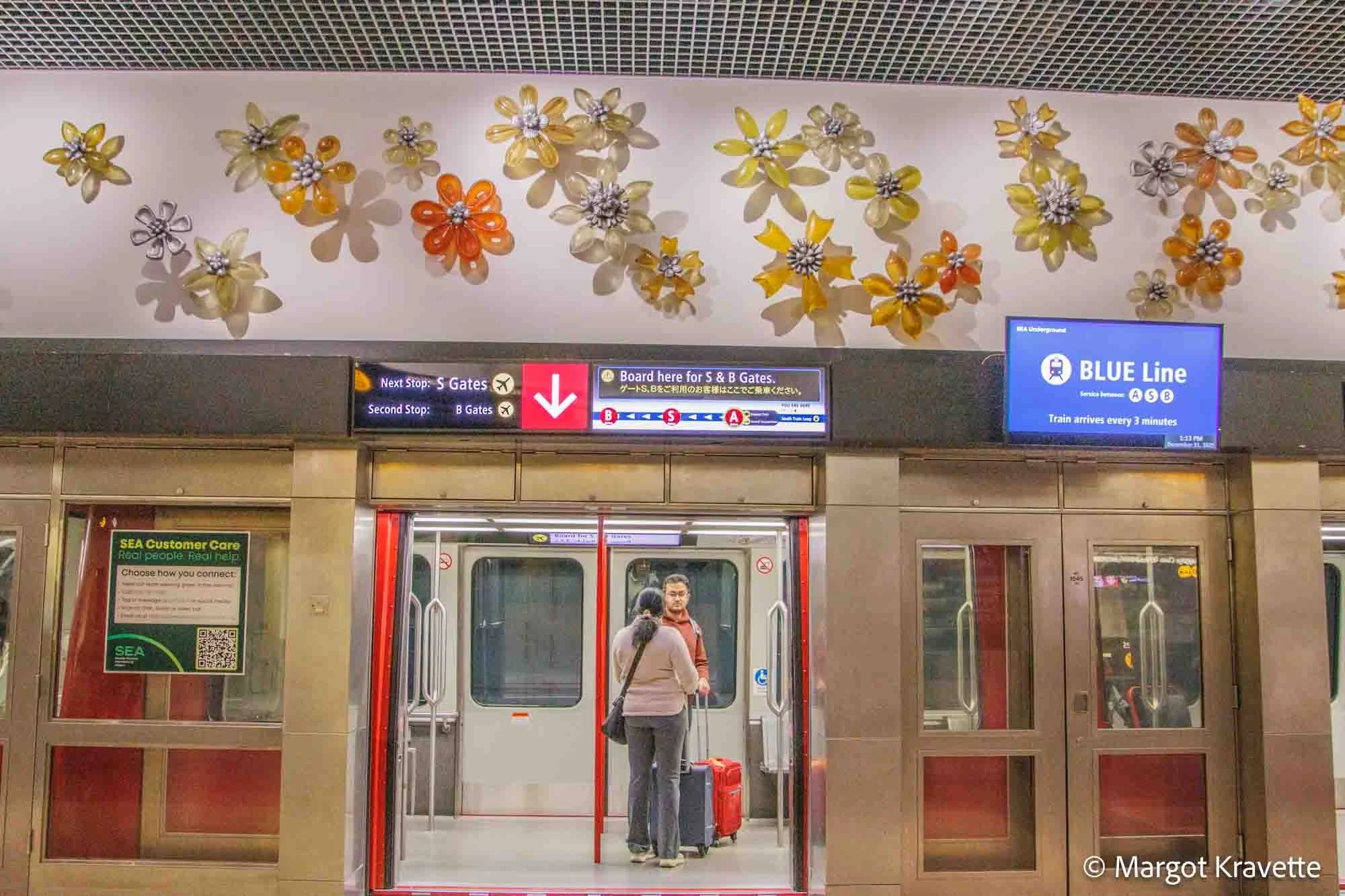
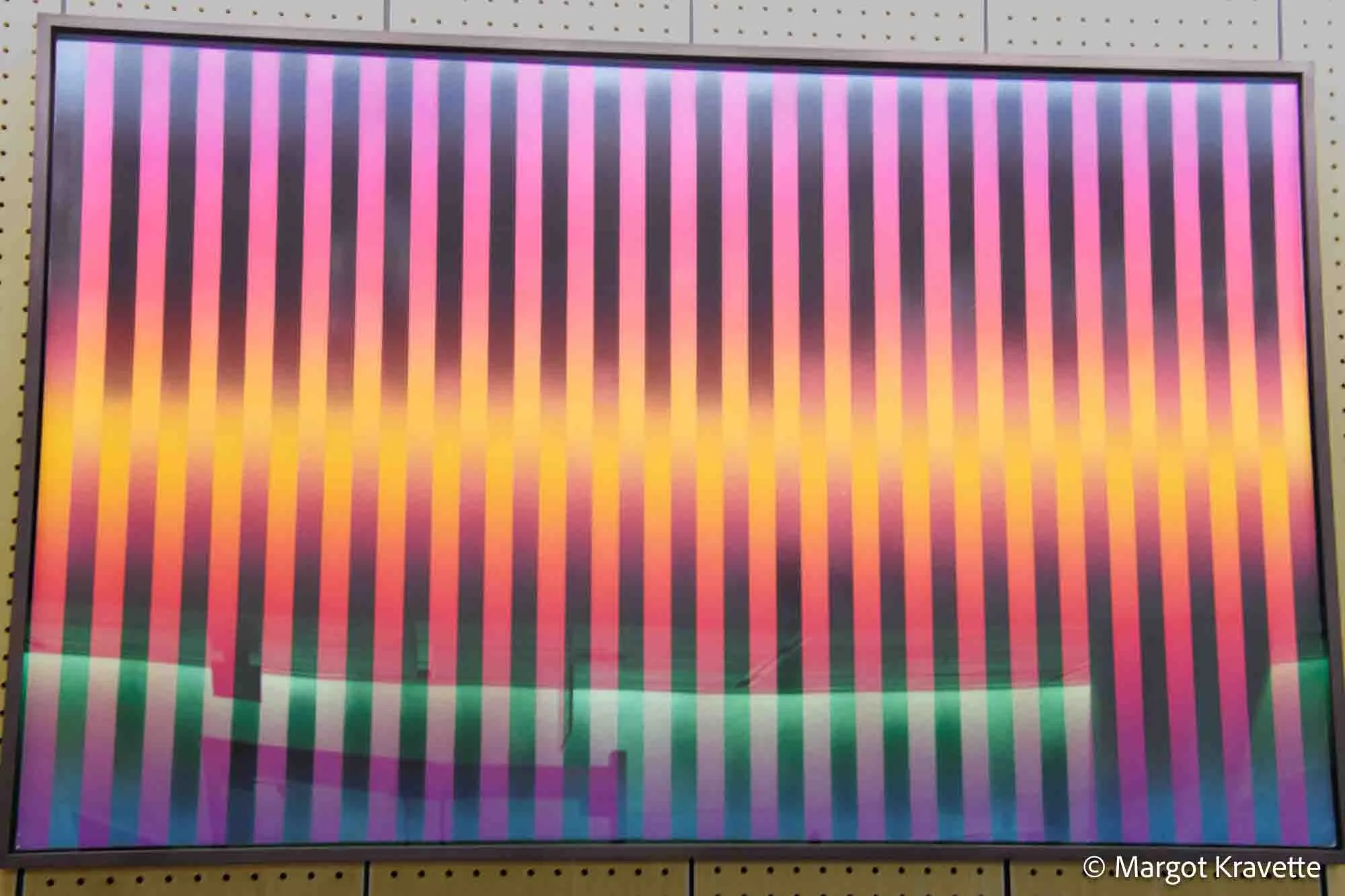
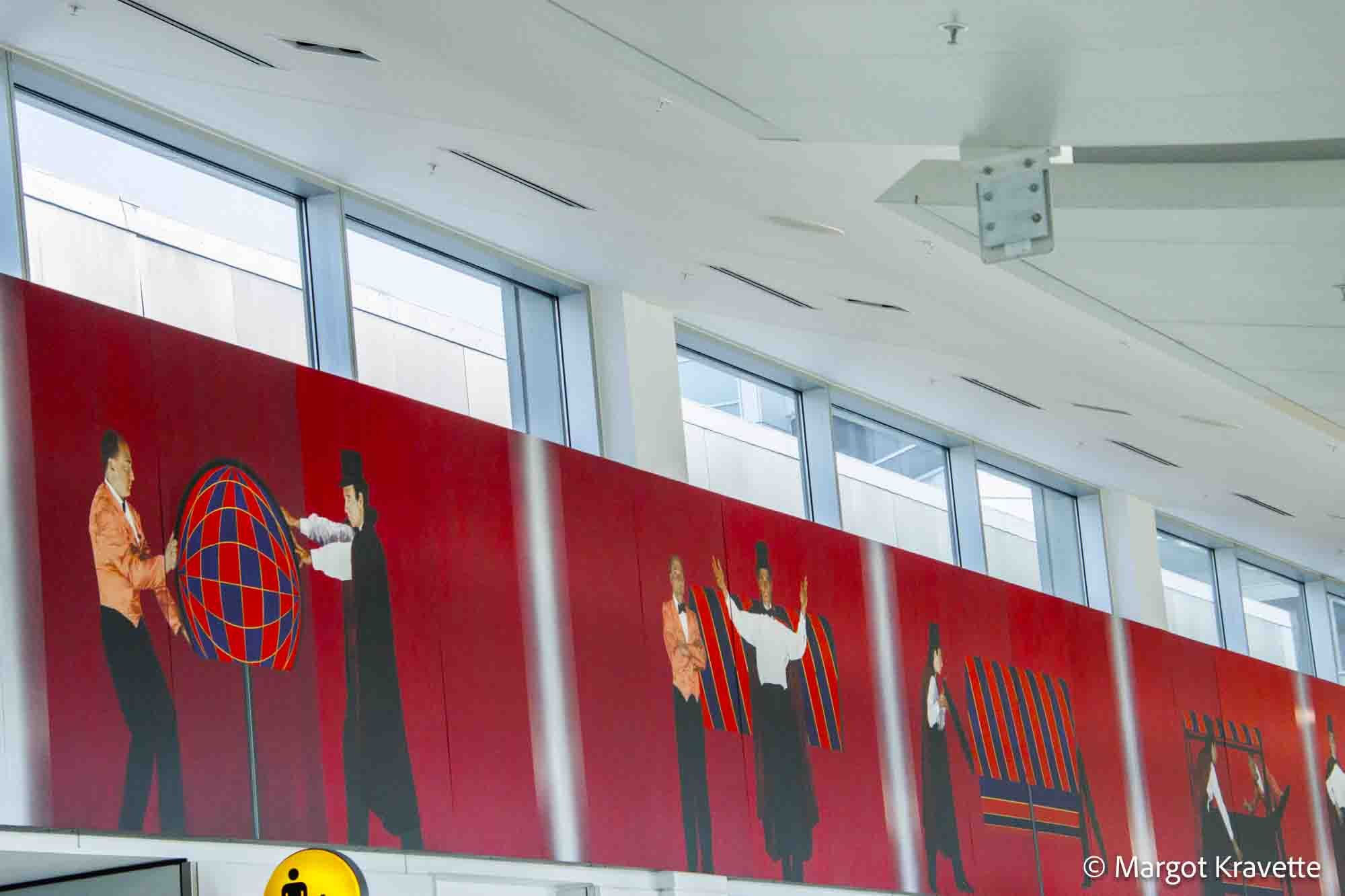
VENETIAN DELTA. FRANCIS CELENTANO
Find Out More: Public Art at SEA Airport. This is the primary page with many articles that branch out about the Public Art project.