

Stehekin
STEHEKIN . Stehe…what? What is it? Where is it?
Many have never heard of it. My first introduction to Stehikin was in 1982 when my new director at (then) Group Health introduced herself and said she was born in and grew up in Stehekin. She told us stories about growing up there which pecked my curiosity even back then.

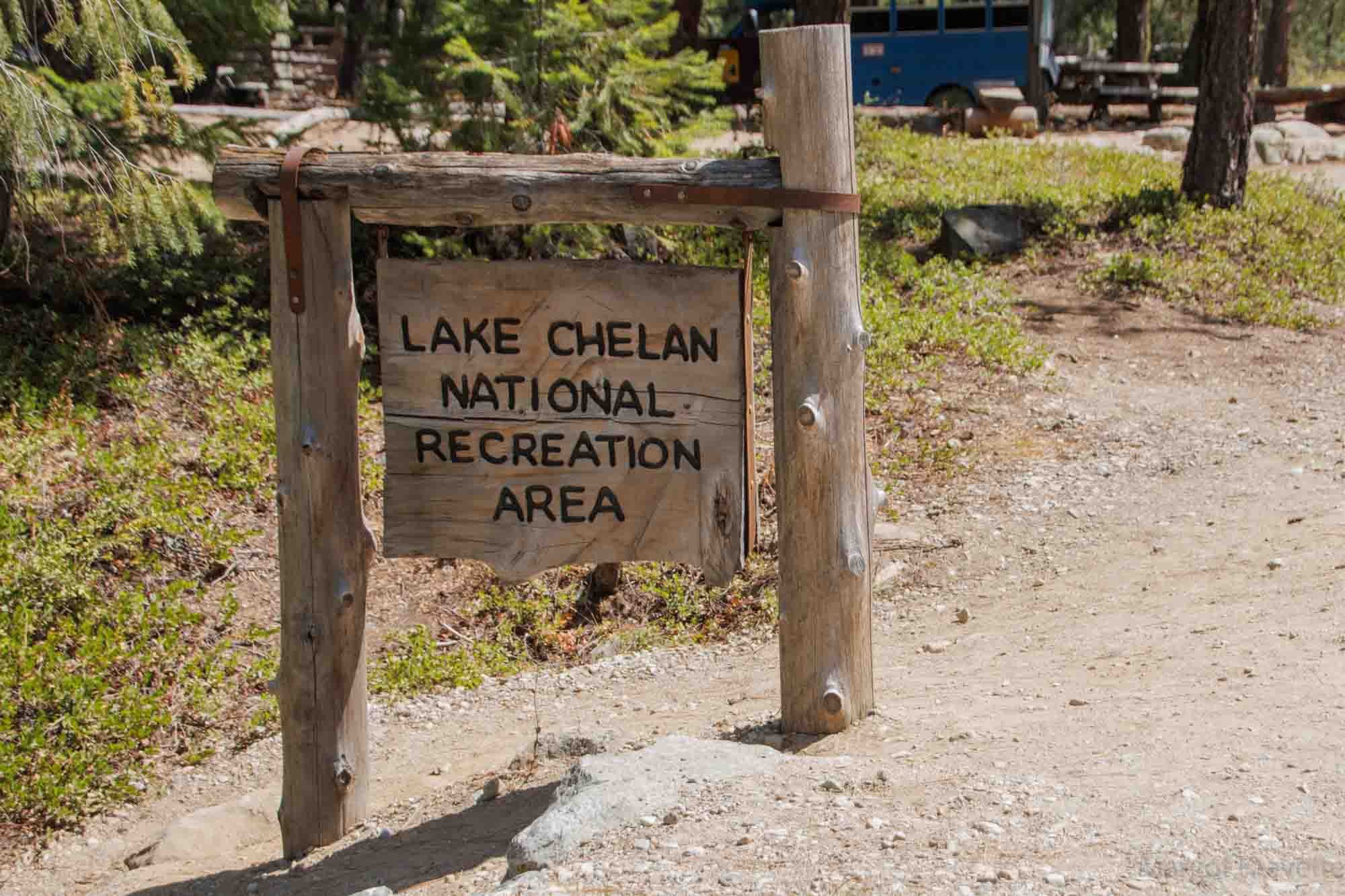
Stehekin sits at the very north end of Lake Chelan, and the only way to get there is by boat or by personal airplane. It also serves as a gateway to the Lake Chelan National Recreation Area, an expansive region within the North Cascades National Park. It is surrounded by vast wilderness and federal lands accessible by boat, or plane. However, if you are so inclined, the Chelan Lakeshore Trail will host you for 7-18 miles through meadows and forests, and along the lakeshore on the way to Stehekin including parts of the Pacific Crest Trail. Several of the ferries to Stehekin will drop you off from Chelan at any of several places where you can start your hike. In the Salishan language Stehekin means “the way through”, referring to the Native Americans’ travel route between the North Cascades and Lake Chelan.
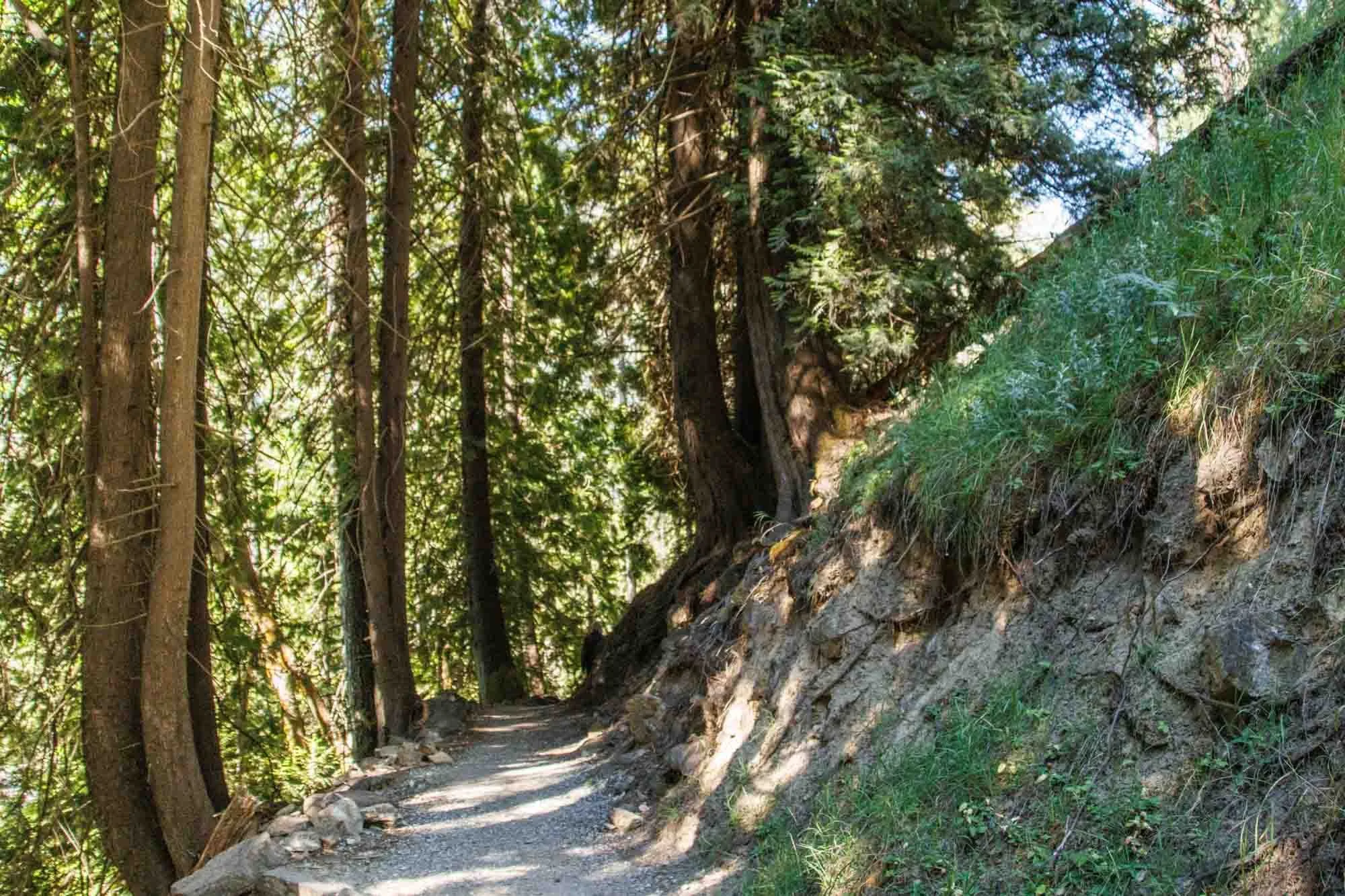
Stehekin’s population is approximately 85 people within 20 families, but it has many more in the spring, summer, and early fall with visitors. Most people come to Stehekin for its hiking and camping with its vast network of trails and for all ages and level . Stehekin offers a range of settings for camping,, from lakeside sites to quiet roadside camps to backpacking sites. All camping, with exception of lakeside sites, requires a free backcountry permit, available from the Golden West Visitor Center. Most of the trails and campsites are several miles from the dock and other resources. They can be reached by walking, by the Stehekin Shuttle bus that transports visitors to points about 11 miles, or by bicycles that are available for rent near the dock.
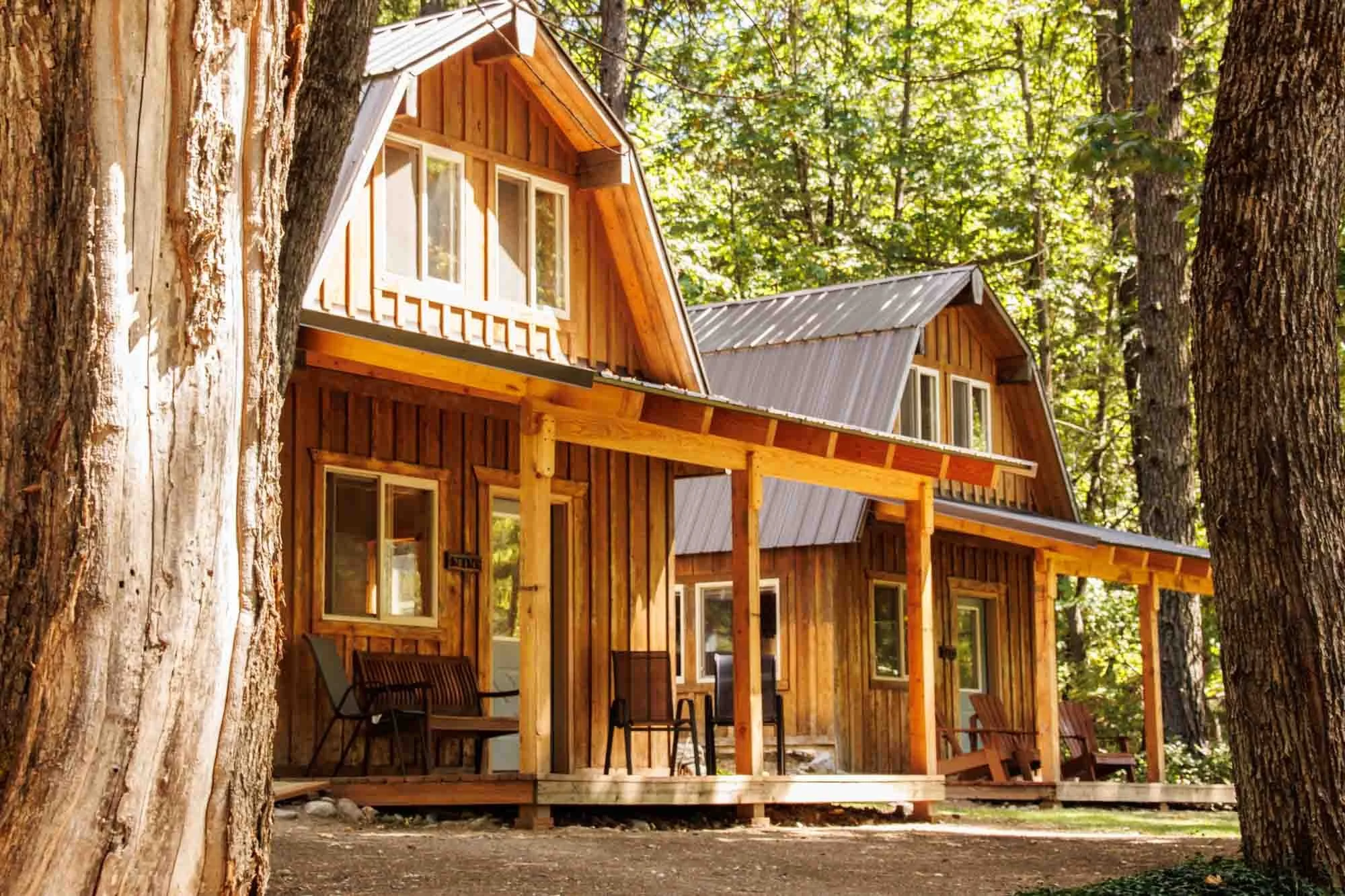
In March, when Carolyn and i were planning our August trip to Stehekin, we thought we would stay overnight and not rush through our visit. Unfortunately, we were too late to rent one of the popular cabins or rooms for two, for only one night. From a luxurious set of cabins including meals at its own dining room to the more rustic North Cascade Lodge in “downtown” Stehekin, there are several other options for lodging. Be sure to make reservations sooner than you think.
Not only is there gorgeous natural beauty, there are sites that tell the stories of early settlers and how the land was used for a variety of historic functions. Since we were not staying overnight in Stehekin we felt it would be best to have a guide take us to the historic locations and tell us their stories. When we got off our boat, we immediately saw places to rent a bike, Can Am or boat, purchase souvenirs and t-shirts from the General Store, have a snack, coffee, or a whole meal, sign up to go fishing, and many more options.
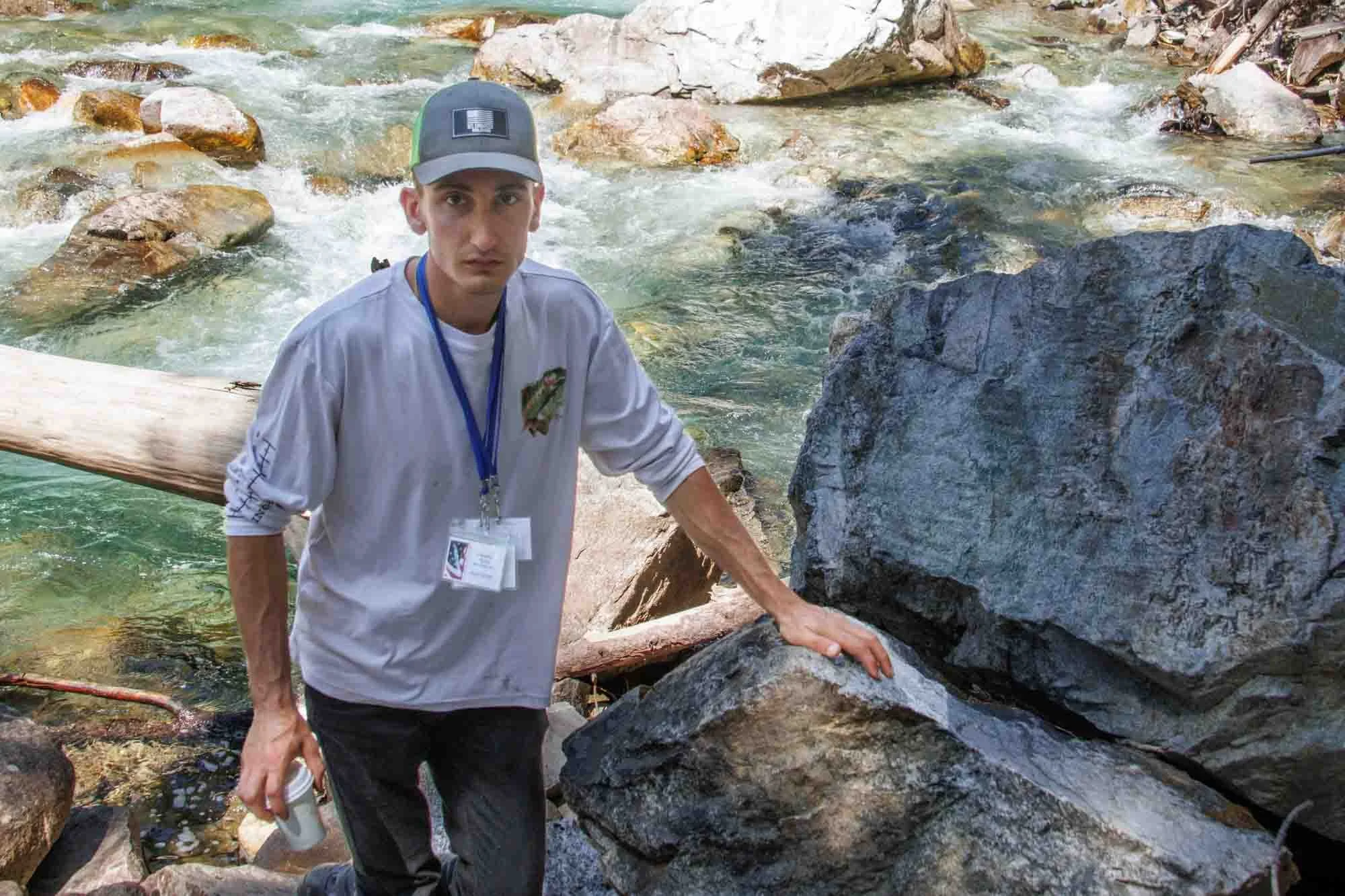
Our guide, Kenneth, was waiting for us when we arrived. He grew up in Stehekin and was very knowledgeable about and proud of where he lived. And he shared almost a full day of fascinating details. Kenneth took us to interesting places all of which are historically or otherwise significant to those who are part of the local and broader communities, as well as for those that visit. As well, we had plenty of opportunities to walk on trails among the old, tall trees that provided shade for us on a very warm day.
One Room School House
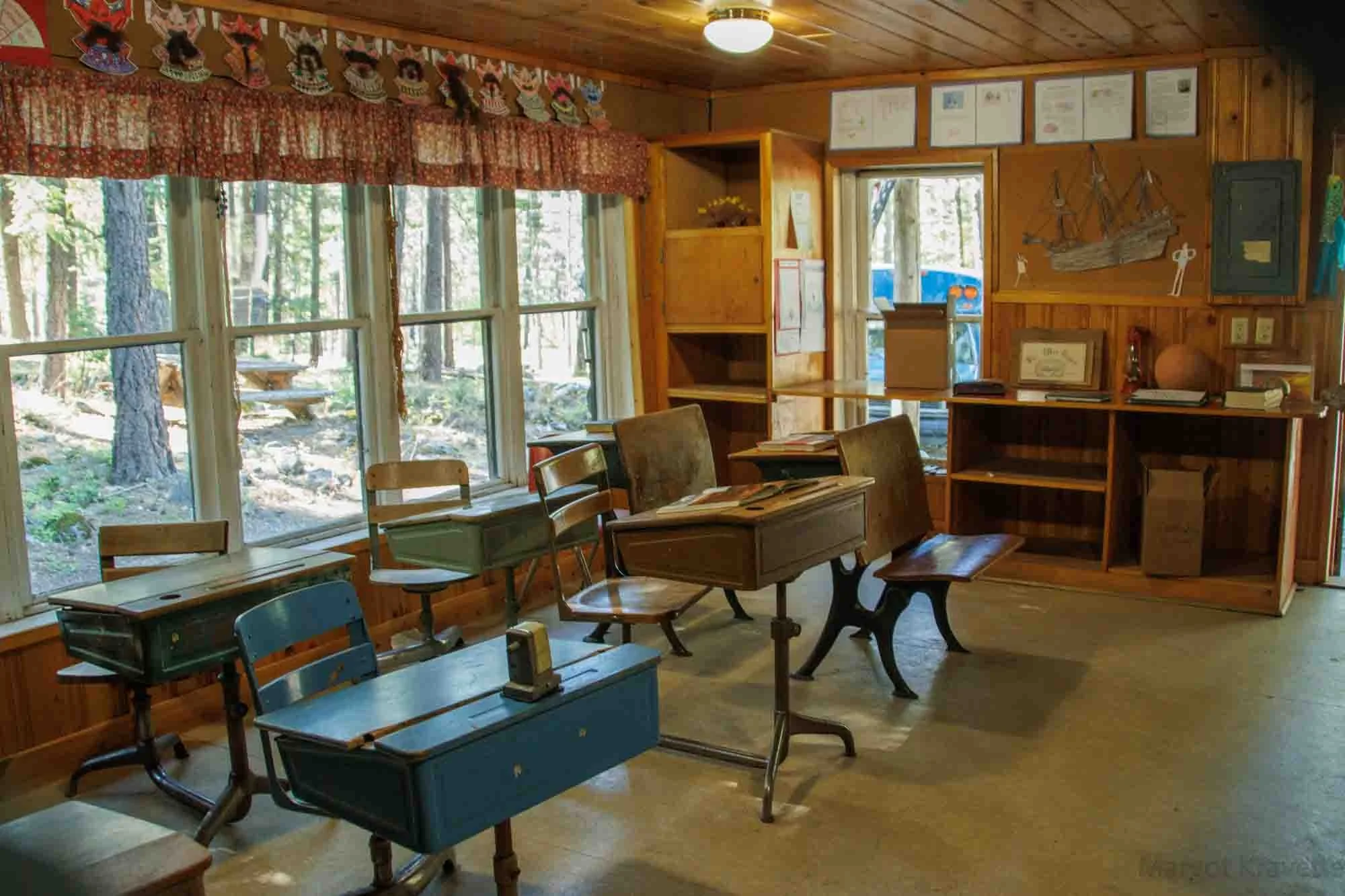
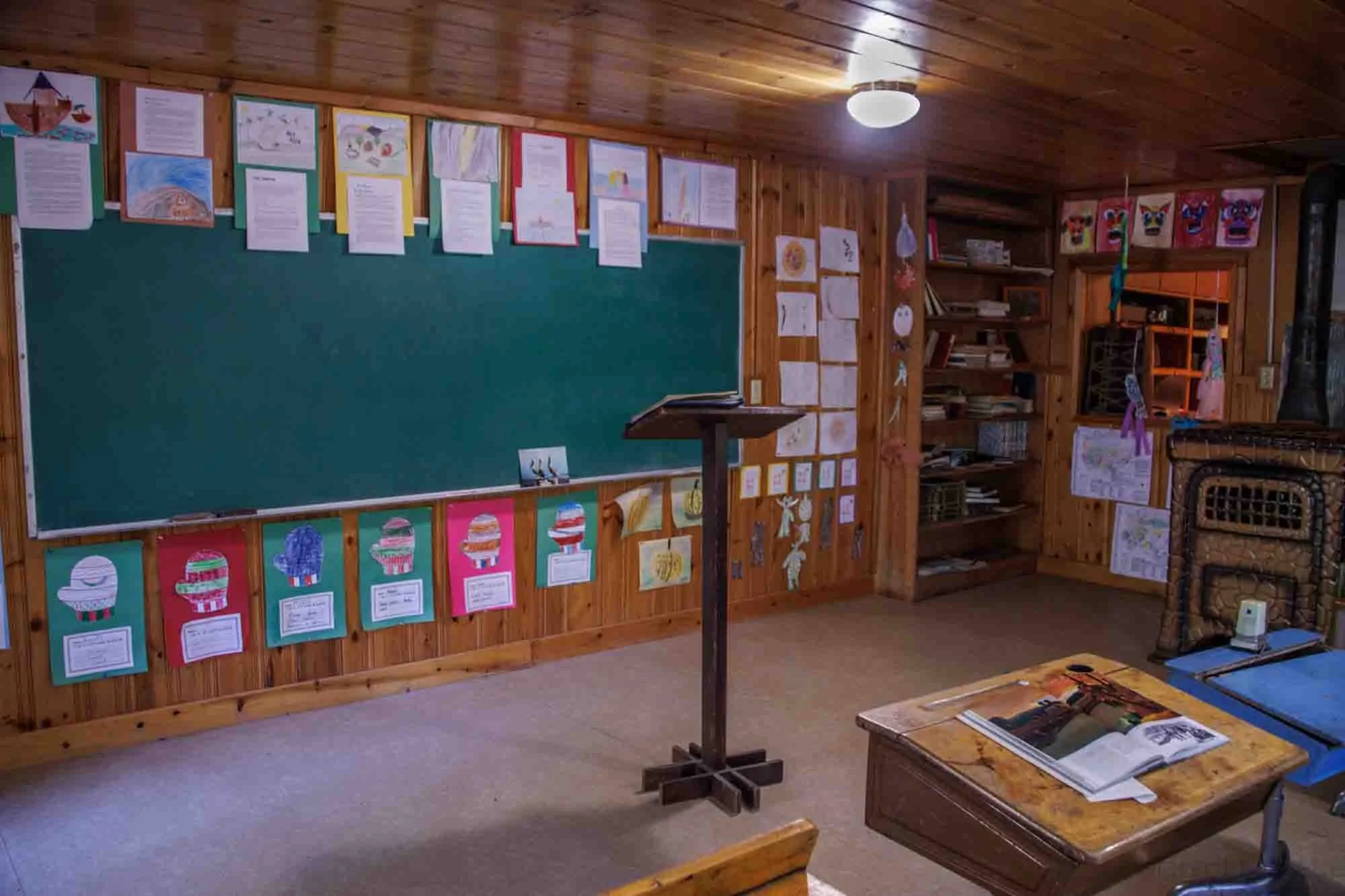
In 1921 the first school opened to teach Stehekin’s children. The small building included two outhouses, a separate kindergarten room, and a small back room where the teacher resides. This one room log cabin style serviced the community for 67 years. It was built by the members of the village and was used until its replacement was completed in 1988.
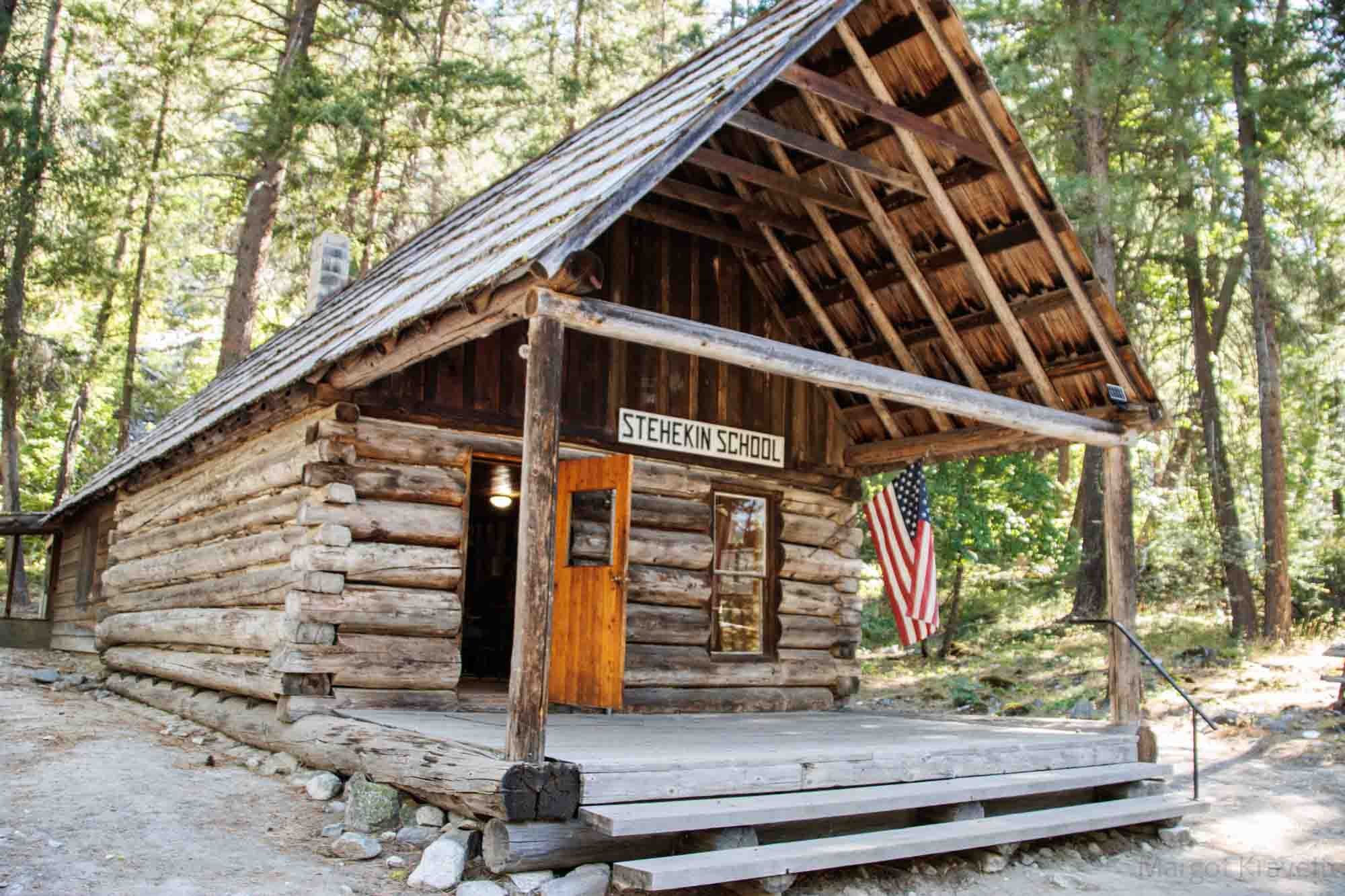
Following approval by the Stehekin School District Board of Directors and passed by Stehekin’s registered voters, construction was started for the new school in the spring of 1988 and was ready for students the fall of the same year. Still a one room school house it has some new spaces that have truly added values. The “motion room” is where the students move around with physical activities, for art, or for anything that keeps them moving. Both the classroom and the “motion room” provide the space that enables them to offer developmentally appropriate educational activities to children in grades K-8.

Rainbow Falls
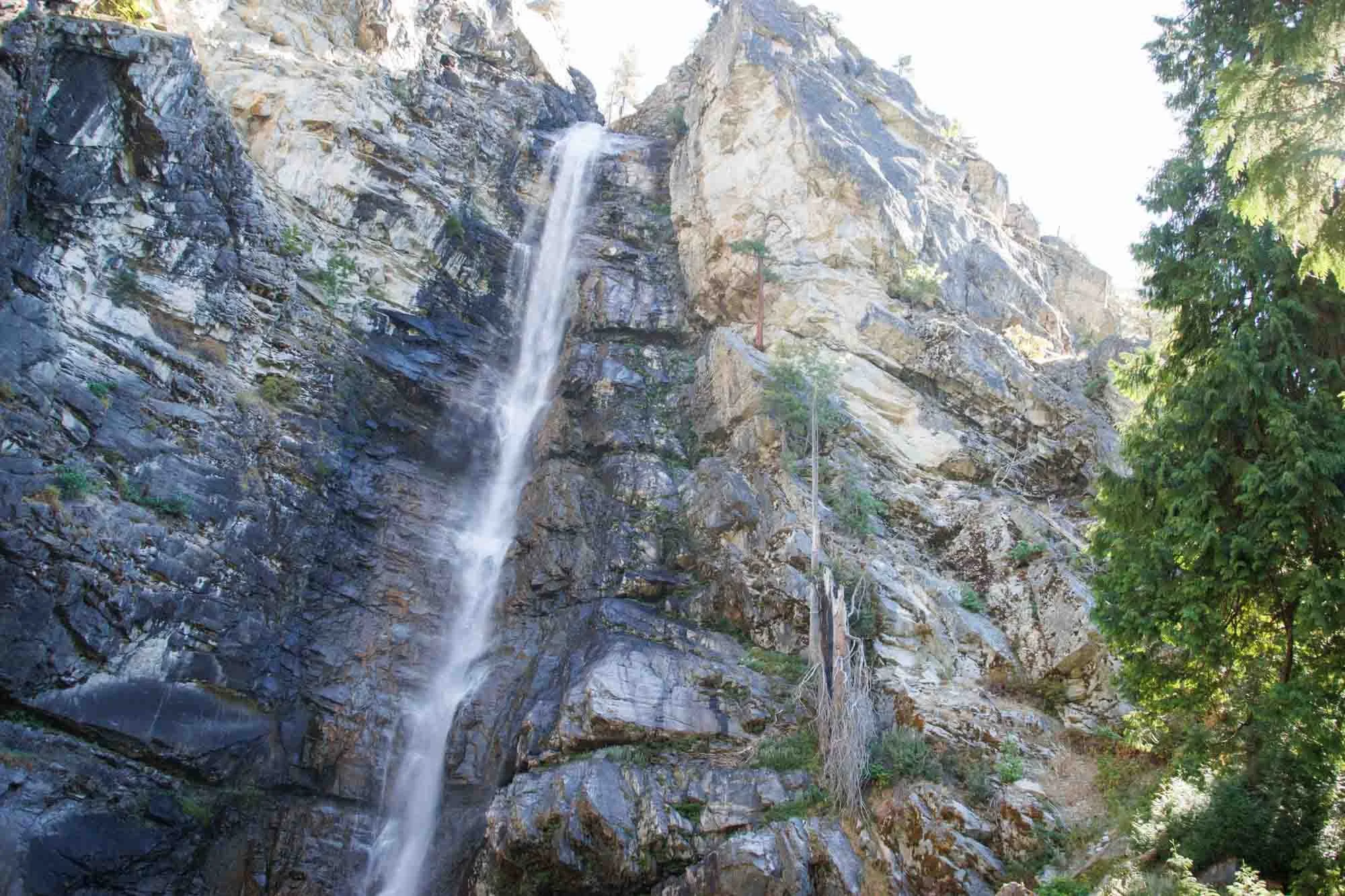
Rainbow Falls resulted from massive glaciers that started in Canada over 2 million years ago, unrelated to the Missoula Floods. Smaller local valley glaciers shaped the mountains, valleys, and what became Lake Chelan. As the ice melted, the growing creek flowed down through Rainbow Creek Valley and was often obstructed by massive boulders and gravel from the continental ice sheet. The stream cut through the blockages before it tumbled over the edge of a hanging valley to free fall to the Stehekin Valley, creating the beautiful waterfall we see today.
Rainbow Falls drops a total of 392 feet in two tiers, with the upper drop of 312 feet. It got its name from the spray that creates a rainbow on sunny days. The falls, 3.5 miles from the Stehekin dock, are part of the Rainbow Falls Park, a popular place for hikers and campers, and are maintained by the National Park Service.

Buckner Homestead Orchard
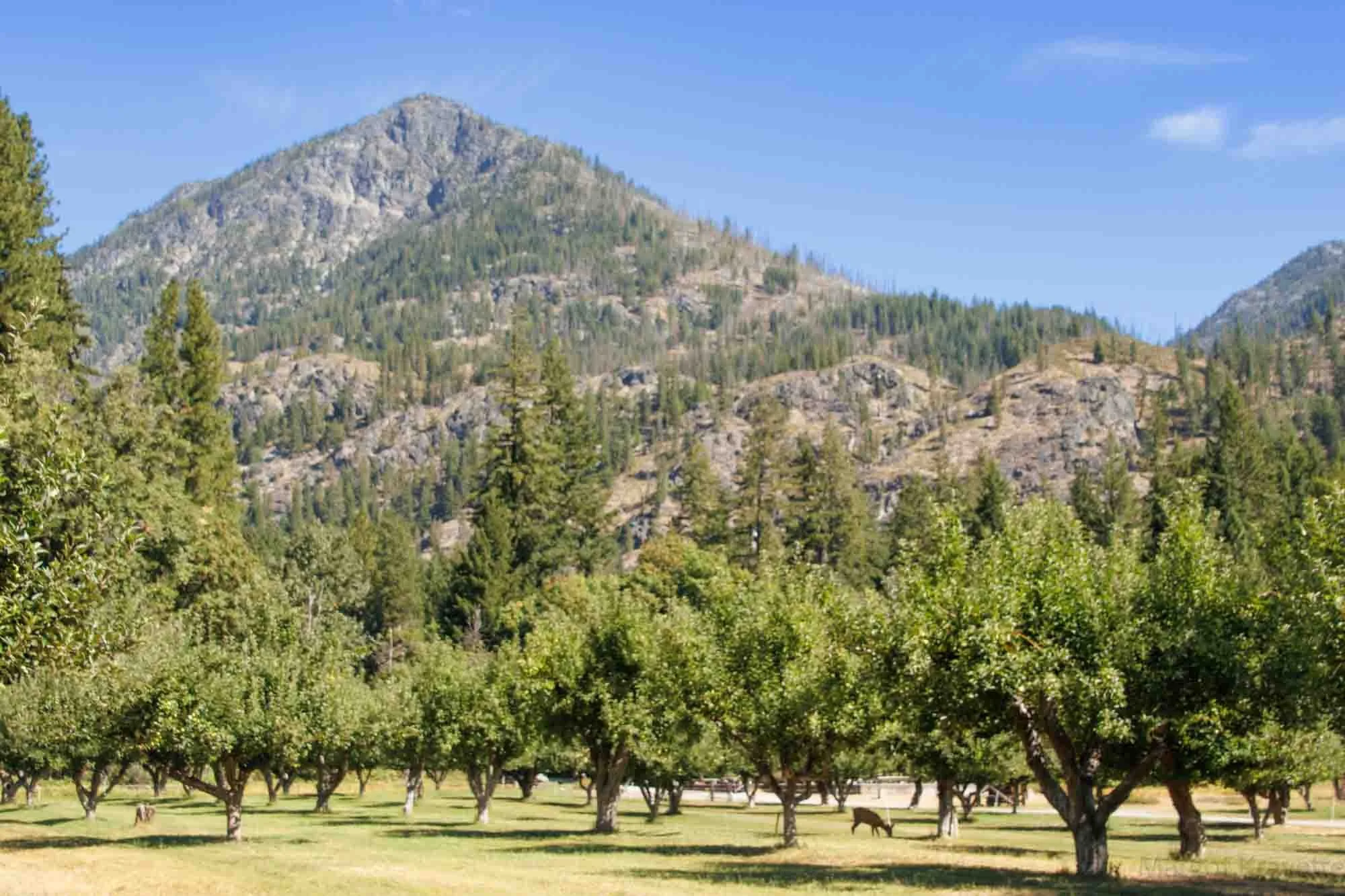
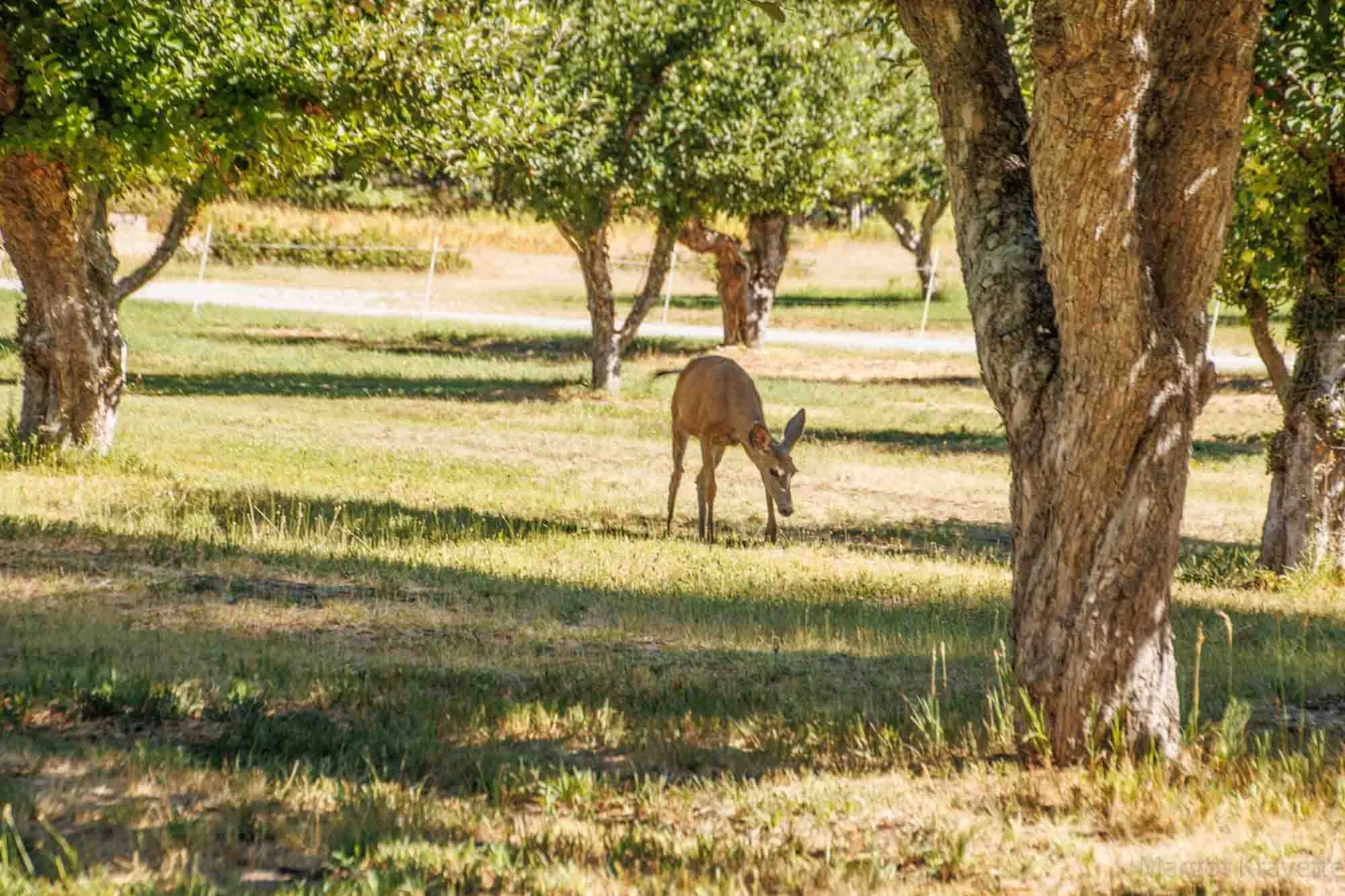
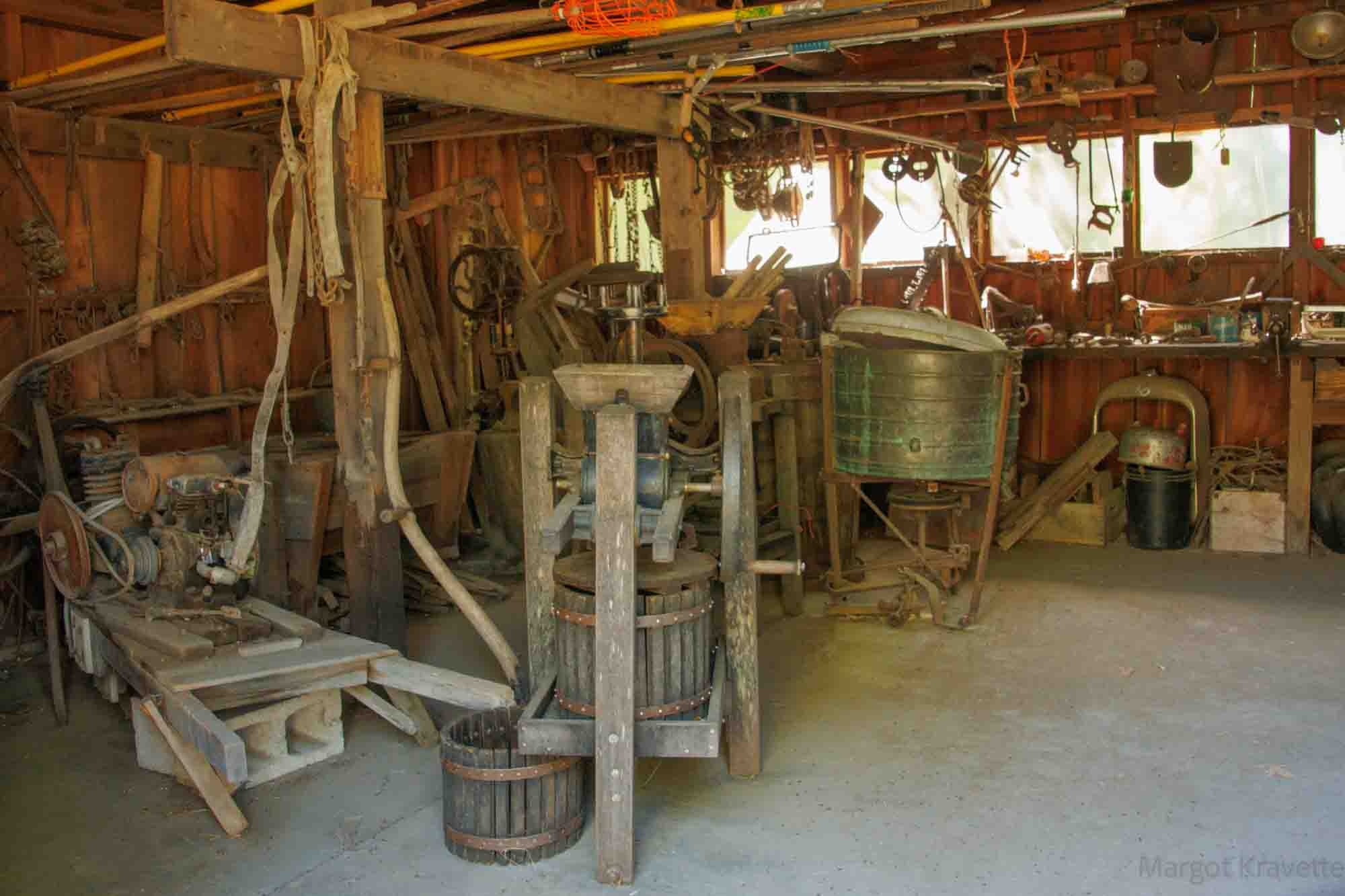
160 acres of land was first occupied in 1889 by William Buzzard where he built a small three room cabin. Hr cleared only one acre for pasture and crop cultivation, including a small apple orchard. In 1910 Buzzard sold the entire property to William Van Buckner and his wife. Buckner developed 20 acres of land for an extensive apple and vegetable farm, and hand dug a gravity-based irrigation system that still serves the farm. Over time Buckner built over a dozen out-buildings to house animals and to store equipment, tools, and produce. And he expanded to two large hayfields, extensive pastures, and a much larger orchard. Dozens of orchards had popped up over the many years the Buckner family grew their apple business. From 1911 to 1955, the Buckners’ operations included pruning, irrigating, picking, packing, and shipping apples to other settlements in the area and the surrounding mining community. Throughout the 1940s the farm produced, at the peak of its production, approximately 5,000 boxes of apples each hrvest season. In 1970, the Buckner son Harry, decided to sell the property to the National Park Service. The homestead of over 100 acres still serves as an example of pioneer life in that area. The homestead still has 12 acres of orchards, with 175 of the original 400 trees planted early in the 19th century.


High Bridge
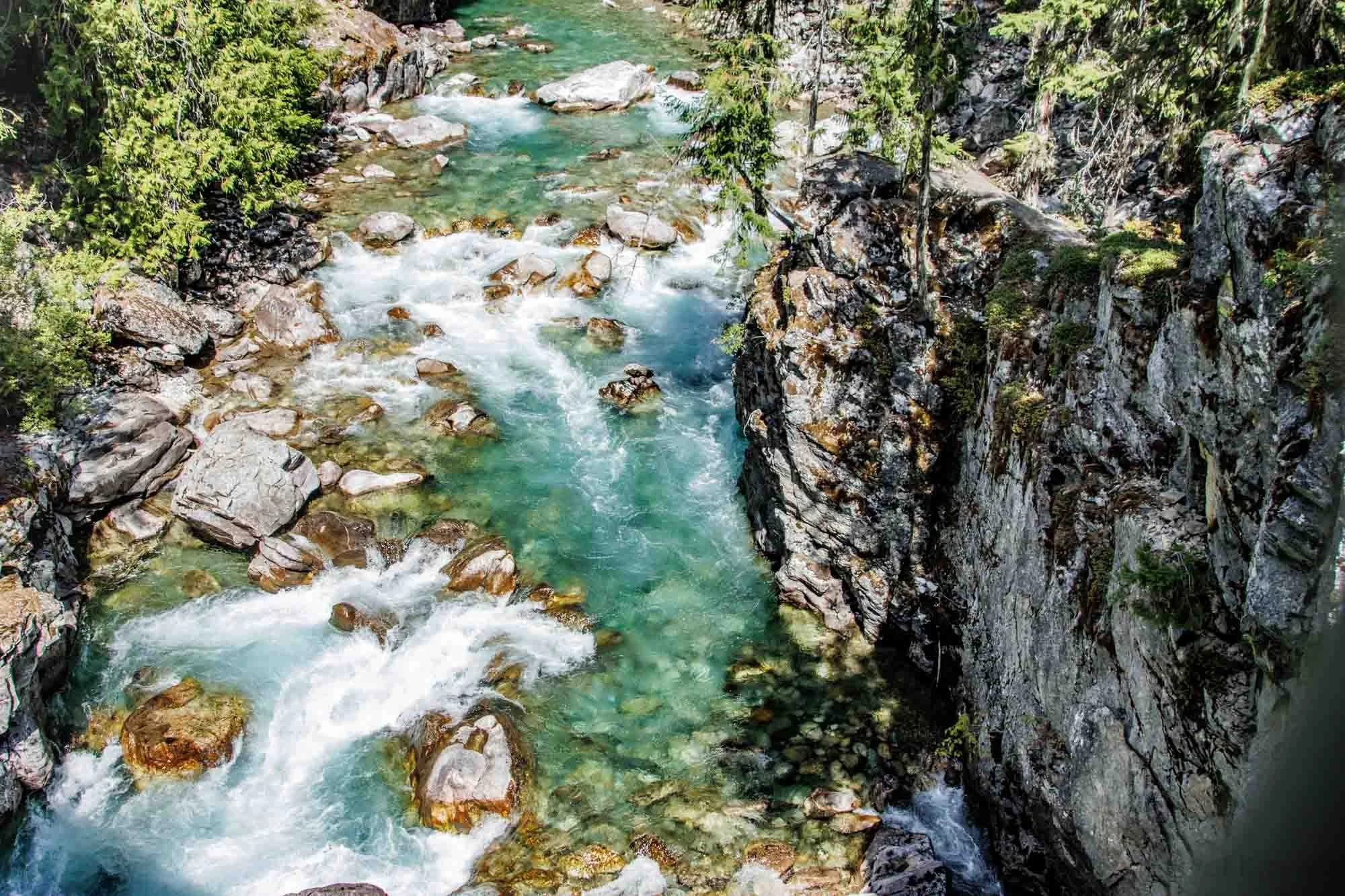
The High Bridge marks the transition from the Lake Chelan National Recreation Area to the North Cascades National Park. The bridge provides views as it crosses over the beautiful blue-green rushing water of the Stehekin River. The High Bridge area had been used by the Native Americans for nearly 10,000 years. In more recent times the U.S. Forest Service and the National Park Service have care for the land.
The Pacific Crest Trail crosses the High Bridge as it goes north to Rainy Pass and south to Stevens Pass, one-quarter mile up the road as part of its 2650 miles from the border of Mexico to that of Canada.
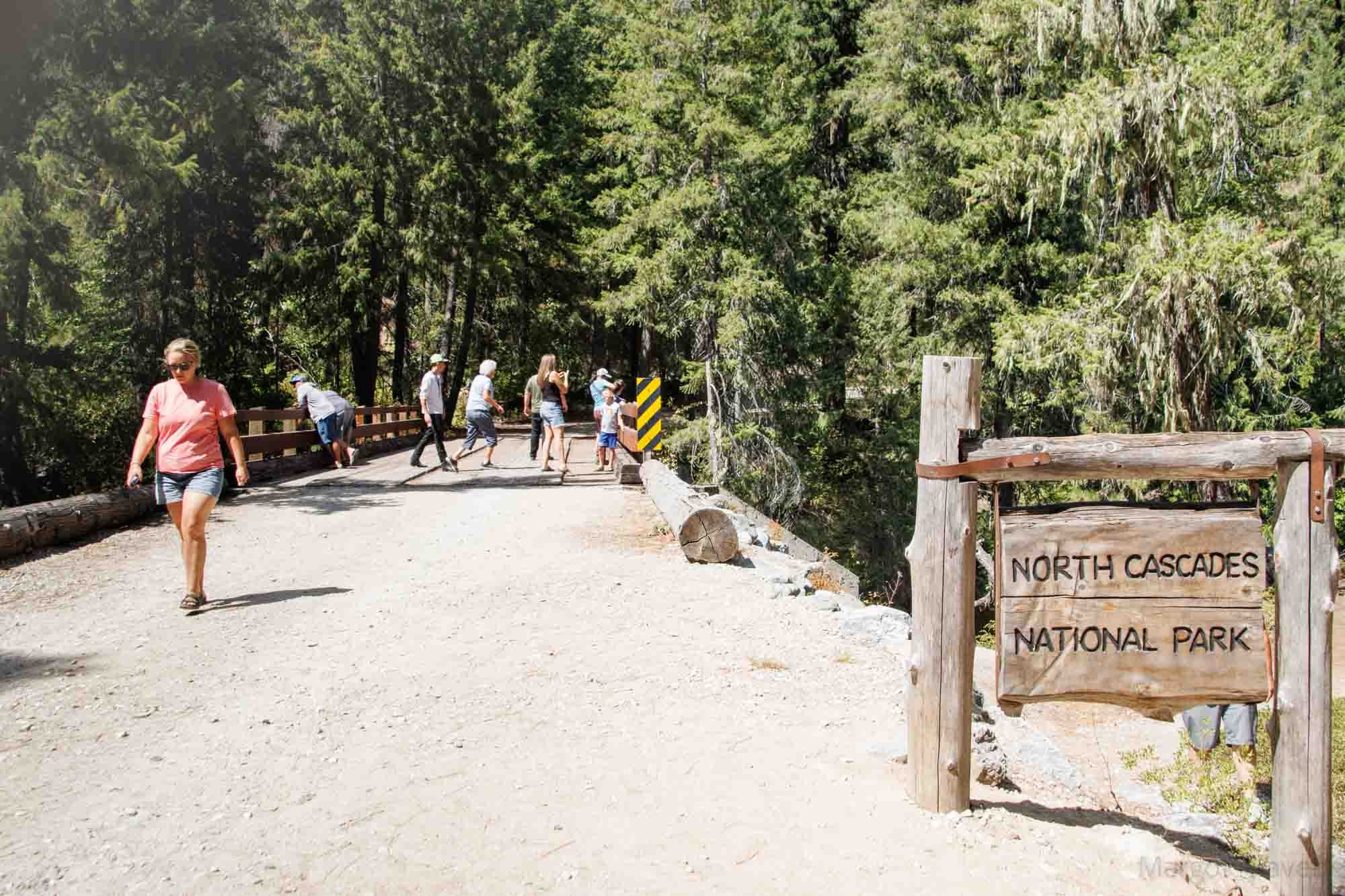
The High Point Bridge is 1 of the only 3 bridges that cross the Stehekin River. This area of the river is much rougher than when it goes under the Harlequin bridge (below) because of the volume of rocks as well as the angle the water is flowing.
Harlequin Bridge
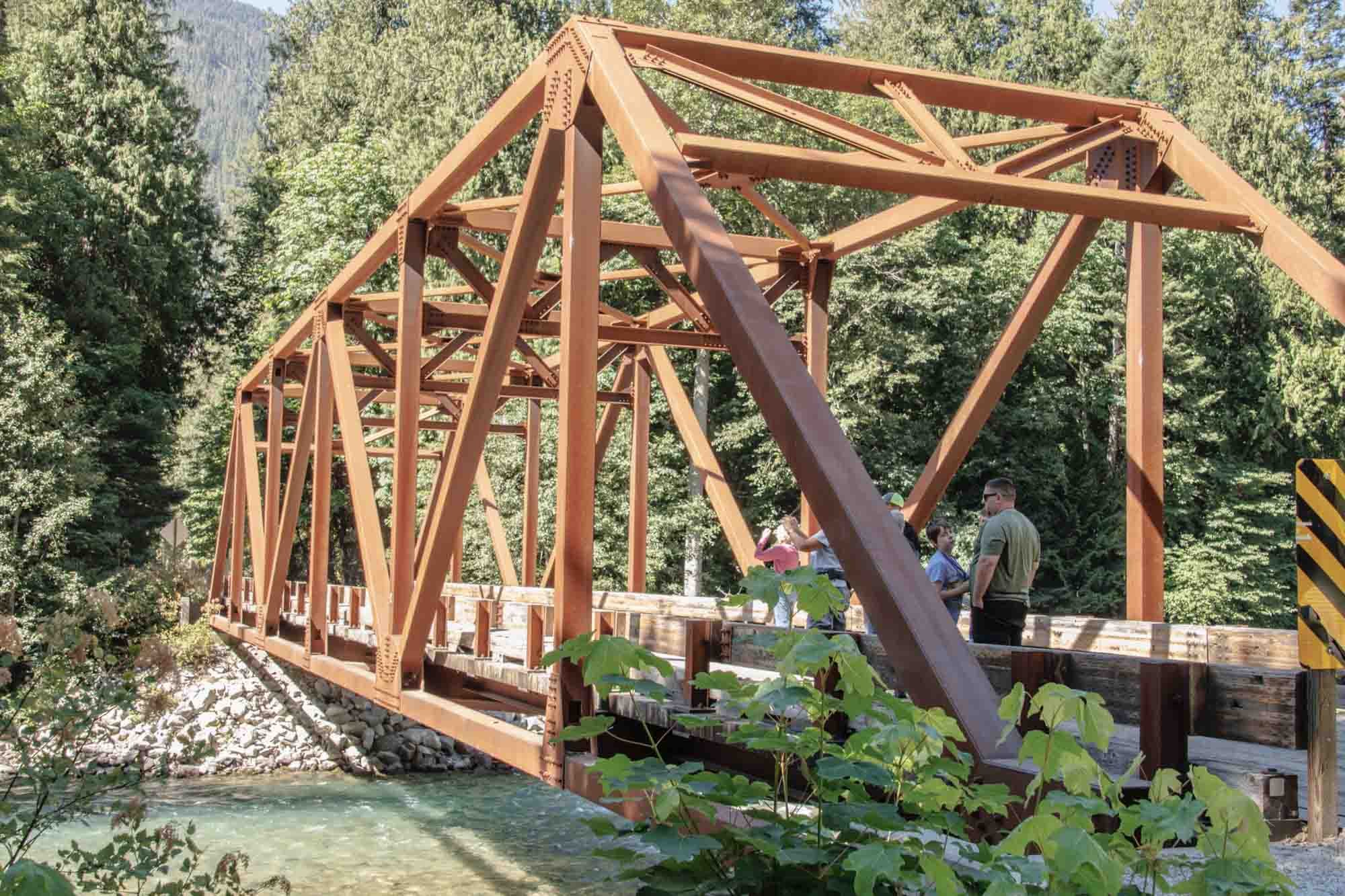
The Harlequin Bridge, otherwise known as the Company Creek Bridge, is another of the 3 bridges that cross the wild Stehekin River. The current bridge is the 5th from the time the bridge was first built in 1888, followed by replacements in 1898, 1906, 1948, and the existing one which was built in 2000. The 1948 bridge’s construction was changed by using timber and in the Brooklyn truss design which was stronger and more stable. Nearly 50 years later the bridges timbers were found to be severely cracked and splintered, and inspectors noted isolated pockets of decay. For the 2000 bridge the style of construction – the Brooklyn truss design – was again used, but the timber was replaced by unpainted weathering steel. Timber deck panels and bridge rail complemented the texture and feel of the truss.
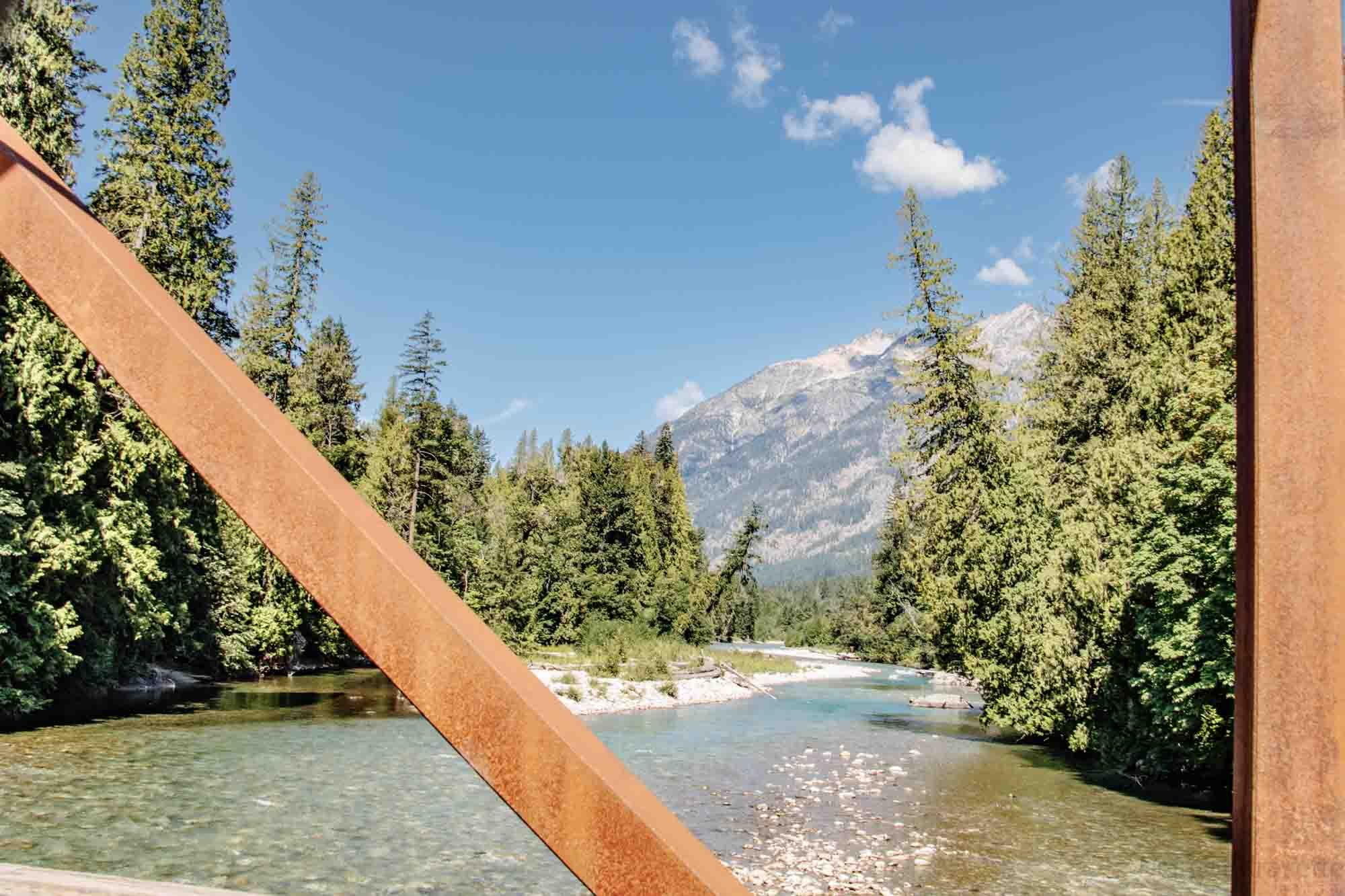
Once you arrive in Stehekin, leave your boat and head east, west, or north, away from what I call the “commercial” area near the dock. You enter a magical place with thousands of acres of mountain scenery where you can hike, explore, and see the stars from your campsite at night. Or you explore the fascinating history of this place by visiting bridges, water falls, orchards, gardens, school houses, and more. One way or another you leave Stehekin with images of a place you will long remember.